Best Snack Subscription Boxes 2026: 5 Compared
Five snack subscription boxes from $13 to $40 per month, covering the spectrum from a new country's snacks arriving on your doorstep each month to curated Japanese confectionery to health-focused bite. Taste consistency between batches matters more than health claims on the label.
Quick answer
SnackCrate is the best all-round box because it ships the actual retail bags sold to locals in the featured country, not export approximations, at roughly $30 a month for 10 full-size snacks. Universal Yums pairs its snacks with a 12-page trivia booklet and tiers from $14 to $40, Graze runs nutritionist-designed portions with allergen labelling at about $13, Bokksu sends 20 to 25 Japanese items with a tea pairing on the $49 Classic tier, and Mouth curates small-batch American producers with story inserts.
Each subscription was evaluated on actual snack sourcing authenticity (retail products vs. export-market reformulations), per-snack cost across all tiers, dietary restriction accommodation depth, cancellation policy transparency, and subscriber renewal rate patterns from public review aggregators.
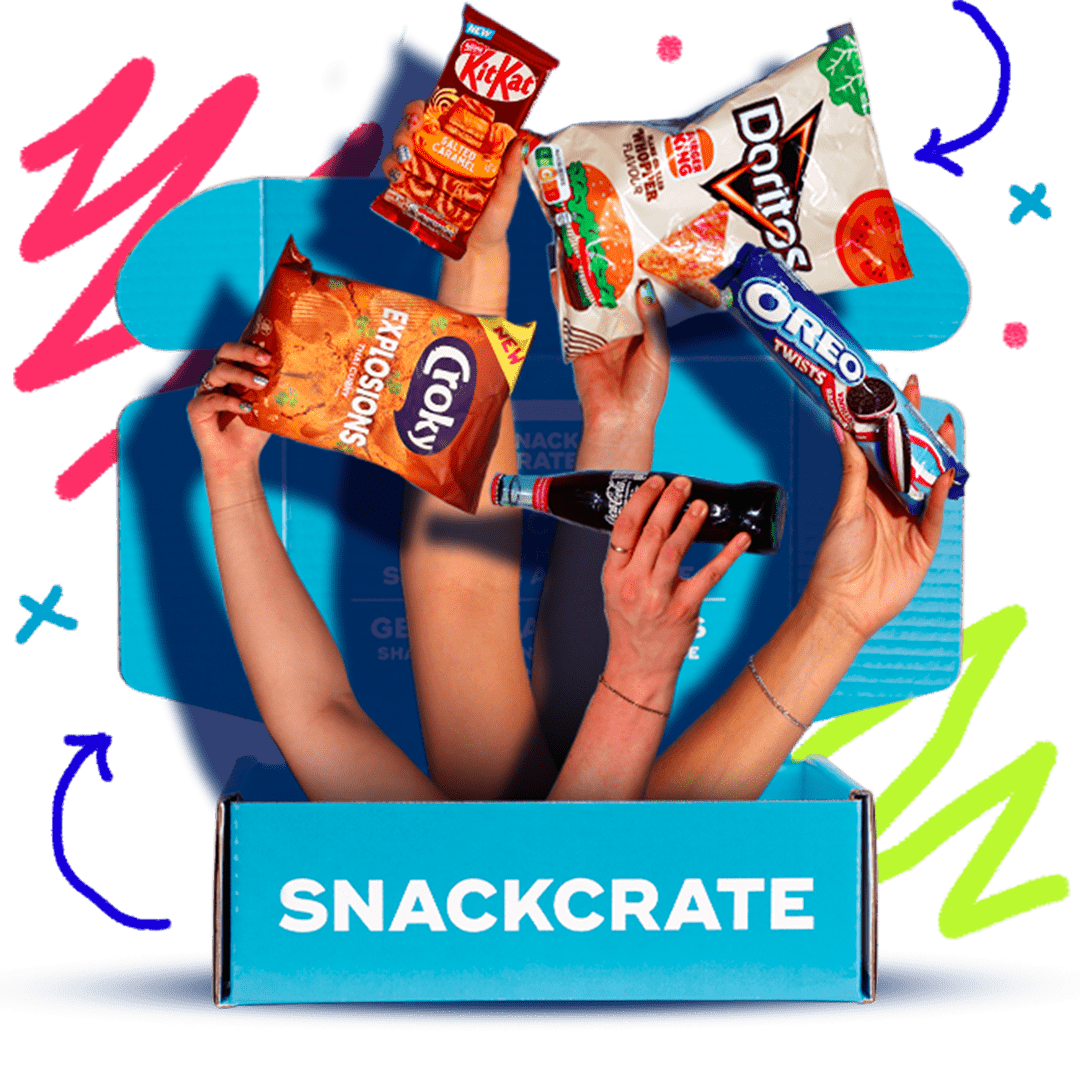
SnackCrate Subscription
Best Overall: SnackCrate delivers actual retail products sold to locals in the featured country — the same bags you'd find in a Lawson or convenience store there, not export-market approximations. At ~$30 per month for 10 full-size snacks, it offers the best per-snack value among the authenticity-focused international boxes.
No partner store here — this opens an Amazon search.
| Product | Price | Link |
|---|---|---|
| $26.00Reference price | No partner store here — this opens an Amazon search. | |
| $20/monthReference price | No partner store here — this opens an Amazon search. | |
| $13.99Reference price | ||
| $60.00Reference price | No partner store here — this opens an Amazon search. | |
| $44.95Reference price | No partner store here — this opens an Amazon search. |
| Product | Price | Snacks per box | Country focus | Dietary options | Cancel window | Gift option |
|---|---|---|---|---|---|---|
| SnackCrate Subscription | ~$30/month (Standard) | 10 full-size | Rotating globally | Limited filtering | 5 days before billing | Yes |
| Universal Yums Subscription | $14–$40/month (3 tiers) | 6–20+ depending on tier | Rotating globally | Vegetarian filter | 5 days before billing | Yes (prepaid 3/6/12 month) |
| Graze Snack Subscription | ~$13/month | 9 (controlled portions) | N/A — Graze-designed | Vegan box, allergen labels | Any time | Limited |
| Mouth Artisan Snack Subscription | $40–$45/month | 6–8 full-size | USA artisan only | Vegetarian, vegan, gluten-free filter | Skip any month | Yes |
| Bokksu Japanese Snack Subscription | $29–$49/month (2 tiers) | 12–14 (Tasting) or 20–25 (Classic) | Japan only | Vegan flagged in guide | 24 hours before ship | Yes (annual plans) |
Top picks
Related articles

Best international snack discovery — retail products from a new country each month, 10 full-size snacks at ~$30/month. Authentic local brands, original packaging. Best for snackers who want the real thing from each country. Limitation: culture card is brief; allergen info may be in the original language only.
SnackCrate delivers actual retail products sold to locals in the featured country — the same bags you'd find in a Lawson or convenience store there, not export-market approximations. At ~$30 per month for 10 full-size snacks, it offers the best per-snack value among the authenticity-focused international boxes. The culture card is thin compared to Universal Yums' booklet.
Pros
- ✓Authentic retail products in original packaging from each country
- ✓10 full-size snacks at ~$30/month including shipping
- ✓Diverse country rotation with wide regional coverage
Cons
- ✗Culture card is brief — less educational context than Universal Yums
Score breakdown
| Price | ~$30/month (Standard) |
| Snacks per box | 10 full-size |
| Country focus | Rotating globally |
| Dietary options | Limited filtering |
| Cancel window | 5 days before billing |
| Gift option | Yes |
No partner store here — this opens an Amazon search.

Best for international variety with cultural context — 6-20+ snacks depending on tier ($14-$40/month), includes 12-page country trivia booklet. Best for curious snackers and families with kids. Limitation: no country choice — editorial calendar determines the rotation; vegetarian filtering available but not full vegan support.
Universal Yums pairs authentic international snacks with a 12-page trivia booklet that makes each box a genuine geography lesson — the reason families with kids rate it so highly. The tiered pricing ($14-$40) scales well per item at the Yummier and Yummiest tiers. The honest limitation: you cannot choose which country ships next, and the rotation is fixed by Universal Yums' editorial calendar.
Pros
- ✓12-page trivia booklet covers food culture, history, and geography
- ✓Tiered pricing from $14-$40 fits different household snacking volumes
- ✓Vegetarian filter available at signup
Cons
- ✗No country selection — rotation is fixed by editorial calendar
Score breakdown
| Price | $14–$40/month (3 tiers) |
| Snacks per box | 6–20+ depending on tier |
| Country focus | Rotating globally |
| Dietary options | Vegetarian filter |
| Cancel window | 5 days before billing |
| Gift option | Yes (prepaid 3/6/12 month) |
No partner store here — this opens an Amazon search.
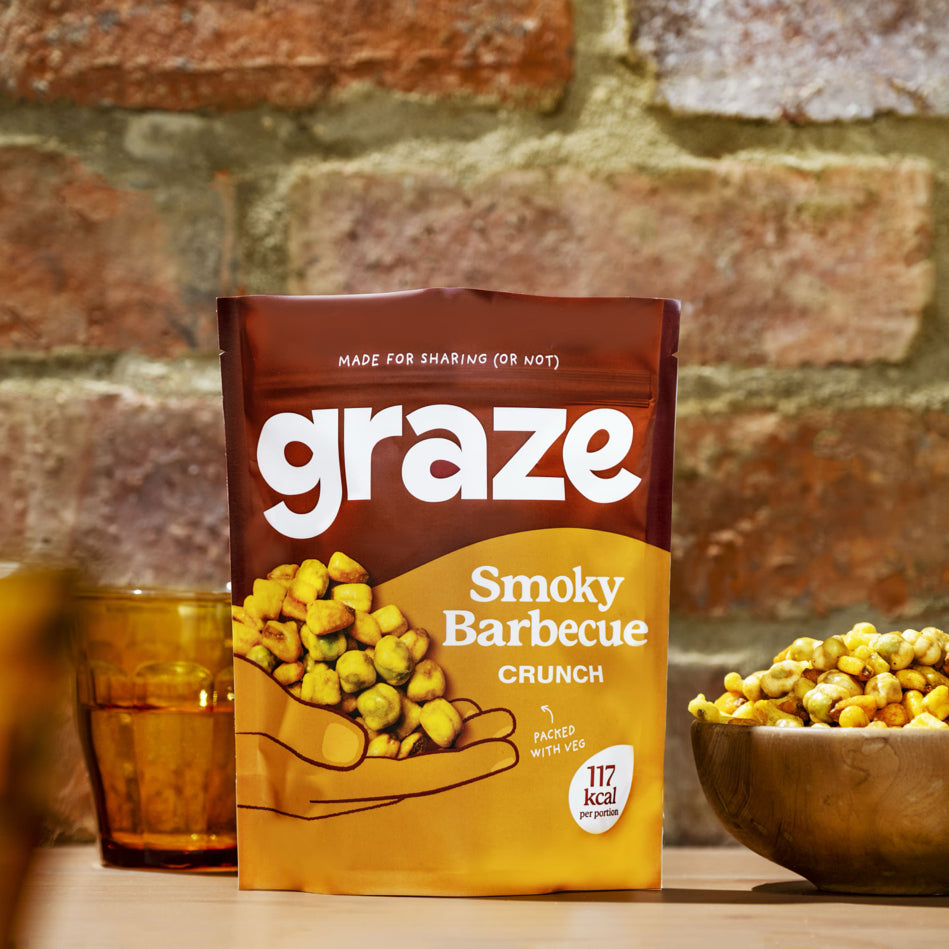
Best healthy snack subscription — 9 snacks at ~$13/month, designed by nutritionists, explicit allergen labeling, dedicated vegan box. Best for health-conscious snackers who want variety without dietary compromise. Limitation: no international sourcing or artisan narrative; smaller portion sizes than international boxes.
Graze is the only subscription in this comparison designed around nutritional goals rather than discovery — 9 snacks per box at ~$13/month, each nutritionist-designed with explicit allergen labeling and a dedicated vegan box option. The per-portion calorie control removes the willpower tax of eating from an open family-size bag. No international flair and no artisan story — the value proposition is purely functional.
Pros
- ✓Nutritionist-designed snacks with explicit allergen labeling
- ✓Dedicated vegan box available
- ✓Preference management system — mark items like/try/trash
Cons
- ✗No international sourcing — all Graze-designed products in branded packaging
Score breakdown
| Price | ~$13/month |
| Snacks per box | 9 (controlled portions) |
| Country focus | N/A — Graze-designed |
| Dietary options | Vegan box, allergen labels |
| Cancel window | Any time |
| Gift option | Limited |
Subscribe to our newsletter
Occasional updates and new releases — no spam.

Best artisan US snack subscription — 6-8 full-size items from small-batch American producers at $40-45/month. Producer story inserts, genuine small-business sourcing. Best for food culture enthusiasts who want to support independent makers. Limitation: higher per-box cost; skews toward shelf-stable formats (preserves, crackers, popcorn).
Mouth curates from small-batch American producers — the kettle corn from an Iowa operation with a six-month waitlist, the single-origin chocolate from a California bean-to-bar maker — with producer story inserts for each item. At $40-45/month for 6-8 full-size or large-format items, the per-snack cost is highest in this comparison. The selection skews toward shelf-stable ambient formats rather than chips or candy.
Pros
- ✓Every snack sources from verified small-batch American producers
- ✓Producer story inserts turn each item into a relationship with a maker
- ✓Vegetarian and vegan filters available at account level
Cons
- ✗Highest per-box cost in this comparison — hard to justify without interest in artisan sourcing
Score breakdown
| Price | $40–$45/month |
| Snacks per box | 6–8 full-size |
| Country focus | USA artisan only |
| Dietary options | Vegetarian, vegan, gluten-free filter |
| Cancel window | Skip any month |
| Gift option | Yes |
No partner store here — this opens an Amazon search.
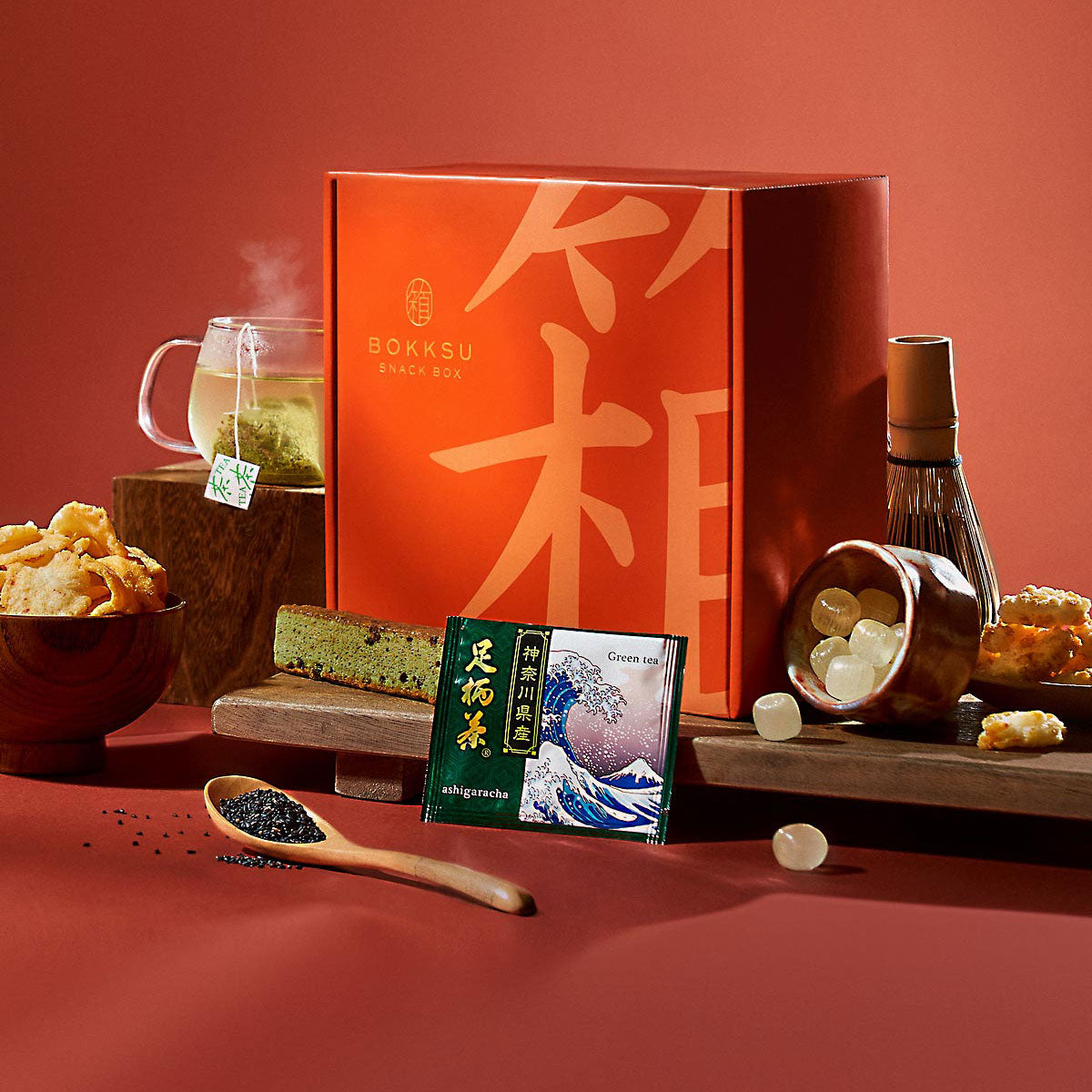
Best Japanese snack subscription — 20-25 items in Classic tier ($49/month) sourced from Japanese family producers, many with limited outside-Japan distribution. Producer-focused culture guide. Best for people with specific interest in Japanese food culture. Limitation: traditional flavors (matcha, red bean, black sesame) require acquired taste; shorter cancellation window (24 hrs before ship date).
Bokksu sources directly from Japanese family producers, many with limited or no distribution outside Japan, and adds producer-focused culture notes rather than general country trivia. Classic tier ($49/month) delivers 20-25 items including seasonal sweets and a tea pairing. Traditional Japanese confectionery — matcha, red bean, black sesame — requires acquired taste, and the 24-hour pre-ship cancellation window demands calendar management.
Pros
- ✓Sourced from Japanese family producers with limited outside-Japan distribution
- ✓20-25 items per Classic box including seasonal sweets and tea pairing
- ✓Producer-focused culture guide goes deeper than country trivia
Cons
- ✗24-hour cancellation window before ship date — shortest among competitors
Score breakdown
| Price | $29–$49/month (2 tiers) |
| Snacks per box | 12–14 (Tasting) or 20–25 (Classic) |
| Country focus | Japan only |
| Dietary options | Vegan flagged in guide |
| Cancel window | 24 hours before ship |
| Gift option | Yes (annual plans) |
No partner store here — this opens an Amazon search.
Which one is right for you?
For families who want to eat their way around the world
Universal Yums Subscription
The 12-page trivia booklet turns snack time into a dinner-table geography lesson — kids engage with the cultural context, not just the snacks.
For pure snack discovery without the reading
SnackCrate Subscription
Same authenticity as Universal Yums — real retail products from each country — with more of the budget going toward snacks and less toward editorial packaging.
For health-conscious snackers
Graze Snack Subscription
Nutritionist-designed portions with full allergen transparency and a dedicated vegan option — the only subscription built around nutritional goals rather than discovery.
For food culture enthusiasts
Mouth Artisan Snack Subscription
Each box introduces small-batch American producers you'd never find at Whole Foods, and the producer story inserts make it genuinely educational about food craft.
For Japan food culture explorers
Bokksu Japanese Snack Subscription
Direct sourcing from Japanese family producers gives you access to wagashi and regional specialties that have no meaningful distribution anywhere outside Japan.
International vs domestic sourcing: what actually ends up in the box
The sourcing model determines the entire character of a subscription. SnackCrate and Universal Yums import directly from the featured country — the snacks are the actual retail products sold to locals in that country, not products made for the export market. This distinction matters: when SnackCrate ships a Japan box, the chips inside are the same bags you'd find in a Lawson convenience store in that country, not a domestically manufactured approximation. The packaging is in the original language, the portion sizes match local market norms, and the flavor profiles are calibrated to local preferences — some of which are genuinely surprising to Western palates. Universal Yums takes the same approach, reinforcing it with a trivia booklet that contextualizes each snack: you learn not just what you're eating but where, when, and why locals eat it.
Mouth operates on a completely different model: it sources exclusively from small-batch American producers — artisan food makers, small regional brands, family businesses with national distribution measured in hundreds rather than thousands of stores. The snacks are American but emphatically not mainstream — you're getting the kettle corn from an Iowa operation that ships to twelve states and has a six-month waitlist for its holiday boxes, not the Lay's or Rold Gold that's available at every gas station. The curation is genuinely editorial; Mouth's team visits producers and selects for quality and story, not just shelf appeal.
Graze sits in a different category still: it's a health-focused subscription that designs and produces its own snacks, working with nutritionists to create products that hit specific macronutrient and calorie targets. There's no international sourcing and no artisan narrative — the value proposition is functional: snacks that won't derail your diet, taste better than most packaged alternatives, and arrive pre-portioned so you're not eating from a family-sized bag. Bokksu sits in its own lane as a Japan specialist: it sources directly from Japanese producers, many of whom are small family businesses making traditional sweets that have limited or no distribution outside Japan, and adds cultural context notes with every box.
Box size, snack count, and per-snack value
Snack count and box size vary enough between services that the monthly price alone is a misleading comparison metric. SnackCrate's standard box includes 10 full-size snacks at around $30/month (free shipping); the Mini box at $14/month includes 5 snacks. Universal Yums' Yum Yum box (the entry tier, $14/month) includes 6-7 snacks; the Yummier box ($25) includes 12+ snacks; the Yummiest box ($40) reaches 20+ snacks plus a bonus item. At the entry tier both services are comparable on per-snack cost; at larger boxes Universal Yums scales better per item.
Graze operates differently: boxes contain 9 snacks at around $13/month, but the snacks are Graze-designed products in their own branded packaging, typically smaller portions (25-35g) engineered for caloric control. Per-snack cost is low, but you're comparing a carefully controlled portion of a nutritionally designed product against a full-size bag of imported chips — different use cases. Mouth's pricing reflects its artisan sourcing premium: the standard box runs $40-45/month for 6-8 full-size or large-format items. Per-snack cost is higher, but the snack size is also often larger — a full jar of preserves or a 250g bag of single-origin popcorn rather than a single-serving packet.
Bokksu Classic ($49/month) delivers 20-25 full-size items including seasonal sweets, savory snacks, and a tea pairing, making it competitive per-item against Mouth despite the higher sticker price. Bokksu Tasting ($29/month) delivers 12-14 items. The Japanese artisan items tend to run small by Western snack standards — a single piece of wagashi or a small bag of senbei is a serving, not a sharing bag — so counting items can be misleading. A more useful comparison: does the box feel satisfying to explore over a week, or do you tear through it in an evening?
Customization and dietary restriction support
Dietary restriction handling is one of the sharpest differentiators between these services, and worth examining carefully before subscribing if you have restrictions. Graze has the most robust dietary filtering system: you can mark individual products as 'like', 'try', or 'trash', and the service builds your box around your preferences over time. Beyond preference management, Graze explicitly labels products for common allergens (gluten, nuts, dairy, soy) and offers a dedicated vegan box with exclusively plant-based snacks. If you have genuine dietary restrictions, Graze's customization depth is in a different category from the others.
Universal Yums offers a vegetarian filter option at signup and notes major allergens in its trivia booklet, but because the snacks are imported third-party products, allergen labeling consistency depends on the source country's requirements — which vary significantly. SnackCrate has a similar constraint: the snacks are retail products from each country, and while the service lists ingredients on its website, some items arrive with packaging in the original language with no English allergen translation. For severe allergies, this is a meaningful limitation.
Mouth allows you to filter by dietary preference (vegetarian, vegan, gluten-free) at the account level, and its artisan producer sourcing means it can often verify ingredient details directly with makers. The limitation is smaller selection in restricted categories — if you need gluten-free, Mouth's box will be lighter than a standard box. Bokksu can accommodate some dietary restrictions (they flag vegan and gluten-free items in their culture guide), but traditional Japanese confectionery often contains ingredients like wheat, sesame, and egg as baseline components — the category is naturally harder to customize for restrictions.
Frequency options and subscription flexibility
Most snack subscriptions default to monthly frequency, and for casual snackers this is right — a box every two weeks would require genuinely dedicated snacking to work through. The question is whether you can adjust frequency, pause for vacations, or skip individual months without losing your subscription discount or triggering a cancellation.
SnackCrate ships monthly with a 5-day cancellation window before the billing date. You can pause or cancel from the account dashboard; the interface is straightforward. They offer an annual subscription at a small discount. Universal Yums ships monthly with a similar dashboard-based pause and skip system, and offers 3-month, 6-month, and 12-month prepaid plans at stepped discounts — the annual plan saves approximately 15% compared to monthly billing. The prepaid plans don't allow pausing but can be gifted, which is how most people use them.
Graze ships every two weeks by default but can be changed to monthly from account settings. The biweekly default is intentional — the 9-snack box is sized for approximately two weeks of snacking. Changing frequency doesn't affect pricing. Mouth ships monthly and allows skipping individual months from the account portal without canceling. Bokksu ships monthly and has a 24-hour cancellation window before shipping — shorter than competitors, which makes it worth keeping the ship date visible if you're managing multiple subscriptions. Annual prepaid plans are available for Bokksu and provide around 15% savings.
Culture content and the educational component
Culture content — the booklets, cards, and notes that explain what you're eating — varies between services in quality and depth, and this component is worth considering if the education dimension matters to you. Universal Yums is the most committed to this: every box includes a 12-page trivia booklet covering the featured country's food culture, history, geography, and snack context. The writing is accessible without being shallow — it's the kind of booklet you might read cover to cover rather than skim and recycle. The trivia booklet is one of the reasons families with kids rate Universal Yums so highly — it turns snack exploration into a dinner-table geography lesson.
Bokksu takes a different approach: the culture guide is focused specifically on the producers, not the country broadly. You learn who makes each item, the family history behind it, and the region it comes from within Japan. For Bokksu's audience — people with a specific interest in Japanese food culture rather than geography in general — this producer-focused framing is more valuable than general country trivia. SnackCrate includes a card with basic facts about the featured country and a few notes on standout products, but it's less developed than Universal Yums' booklet.
Mouth's culture content is producer-centered: each item includes a card or insert about the maker's story — why they started, what makes their product different, where you can find them locally if you want to order direct. This framing turns the snack into a relationship with a producer rather than a geographic destination. Graze includes no culture content at all — the box includes product descriptions and nutritional information, consistent with its functional rather than experiential positioning.
Where each fits
If you want to eat your way around the world and discover what people actually snack on in countries you've never visited, Universal Yums at $14-40/month is the most structured and educational option. The trivia booklet is genuinely good, the snack variety is wide, and the tiered pricing lets you match the box size to your household's snacking capacity. The honest limitation: you don't choose which country ships next — the rotation is fixed by Universal Yums' editorial calendar, so if you get three South American countries in a row when you wanted Asia, there's no way to request otherwise.
If you want the same international discovery but prefer a monthly surprise with slightly more curation emphasis on the snacks themselves rather than cultural context, SnackCrate is the closer competitor. The snack quality is high and the country rotation feels more diverse month-to-month. The honest limitation: the culture card is thin compared to Universal Yums' booklet, so it's more of a pure snacking experience with an international angle.
If you want to eat better snacks without the sugar-and-salt spiral that comes from a bag of standard grocery chips, Graze is the only option designed around that goal. The nutritional transparency, allergen labeling, and per-serving calorie control make it the right subscription for health-conscious snackers who want variety without the discipline required to portion a 300g bag yourself. The honest limitation: no international flair and no artisan story — the value is functional.
If you want to discover American small-batch food producers you'd never find at Whole Foods, and you're happy paying a premium for genuinely artisan products with compelling origin stories, Mouth is the right box. The per-snack cost is higher but you're buying into a category of food that rarely reaches most people's awareness. The honest limitation: the selection skews toward shelf-stable and ambient products — preserves, crackers, popcorn, granola — not the chewy candy or crispy chip format that snack boxes typically deliver.
If you have a specific interest in Japanese food culture and want access to traditional confectionery, regional specialties, and seasonal items that have no meaningful distribution outside Japan, Bokksu is the only subscription designed specifically for that interest. The producer focus adds depth that general Japan-themed subscription boxes rarely achieve. The honest limitation: the monthly cost is higher than other boxes when you account for the total, and traditional Japanese sweets require openness to textures and flavor combinations — matcha, black sesame, red bean — that are acquired tastes for Western palates.
Verdict
For most people who want a snack subscription that delivers genuine discovery, Universal Yums at the Yummier tier ($25/month) is the best-balanced starting point. The snack variety is wide, the culture booklet adds meaningful context, the pricing is competitive on a per-snack basis, and the service has earned its position as the reference point for international snack subscriptions for good reason. Give it three months to see the rotation before judging.
SnackCrate is the right choice if you prefer the snack experience with less editorial overhead — similar discovery, less reading. Graze is the right choice if health considerations are driving the subscription decision. Mouth is for dedicated food culture enthusiasts who derive real satisfaction from supporting independent producers and reading their stories. Bokksu is for anyone who has already decided Japan is the food culture they want to explore most — it's not a gateway; it assumes interest and delivers depth.
Frequently asked questions
How many snacks are in a typical monthly snack subscription box?▼
Can I get a snack subscription box if I'm vegetarian or vegan?▼
Are snack subscription boxes worth it as gifts?▼
How do I pause or cancel a snack subscription without being charged again?▼
What's the difference between Universal Yums and SnackCrate?▼
Prices change. Check the retailer for the current price.
Comments & questions
Discussion happens on nattzy, our community forum. Sign in with Google to post — it takes a second.
Related articles
Food
Best Rice Cookers 2026: 5 Top Models Compared
Best Rice Cookers 2026: 5 Top Models Compared
Best Air Fryer 2026: 5 Models Compared Honestly

Best VPN 2026: 5 compared

Best Electric Toothbrush 2026: 5 models compared honestly

Best Air Purifier 2026: 5 models compared honestly

ConoHa WING review (2026): setup, speed and pricing