Best Business Credit Card 2026: 5 Cards Compared
Five cards. $250K simulated spending across travel, advertising, software, and meals. We calculated effective rewards rate after annual fees, credits used, and category weights.
Quick answer
Match the card to where the spending actually goes. Chase Ink Business Preferred at a $95 fee is the best business credit card for most companies, earning 3x on travel, shipping and advertising. Amex Business Platinum ($695) pays off only with heavy travel; Capital One Spark Cash Plus is flat 2% on everything with no category tracking.
We modeled $250K annual business spending across realistic SMB categories: travel 25%, advertising 20%, software/cloud 15%, dining 10%, shipping 10%, gas 5%, other 15%. We calculated gross rewards, subtracted annual fees, added the value of credits actually used, and computed net effective rewards rate.
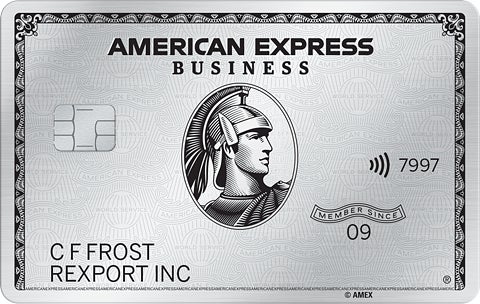
Amex Business Platinum
👑 Best premium travel: The Amex Business Platinum is the best premium business travel card. $695 annual fee, 5x points on flights booked direct with airlines or Amex Travel, $200 annual airline credit, $400 Dell credit (split $200 January-June, $200 July-December), $360 Indeed credit, $200 hotel credit, $189 CLEAR credit, lounge access to Centurion + Priority Pass + Delta SkyClubs.
Top picks ↓| Product | Price | Link |
|---|---|---|
| $695/yr〜$695/yrReference price | ||
| $95/yr〜$95/yrReference price | ||
| $150/yr〜$150/yrReference price | ||
| $375/yr〜$375/yrReference price | ||
| $0/yr〜$0/yrReference price |
Top picks
Related articles


Apply at americanexpress.com. The 5x on flights only applies to direct bookings with airlines or via Amex Travel — not OTAs like Expedia. Set calendar reminders for the Dell credit ($200 each half) and Indeed credit ($120 each quarter) to avoid losing them.
The Amex Business Platinum is the best premium business travel card. $695 annual fee, 5x points on flights booked direct with airlines or Amex Travel, $200 annual airline credit, $400 Dell credit (split $200 January-June, $200 July-December), $360 Indeed credit, $200 hotel credit, $189 CLEAR credit, lounge access to Centurion + Priority Pass + Delta SkyClubs. If you actually use the credits, the effective annual fee drops to $200 or less, and the 5x on airfare makes it the best premium business travel card on the market.
Pros
- ✓5x on flights via Amex Travel or direct with airlines
- ✓$1,200+ in usable annual credits if business-relevant
- ✓Best premium lounge access
Cons
- ✗$695 fee is highest in this comparison
- ✗Credits require active management to use fully
- ✗1x on most non-travel spend
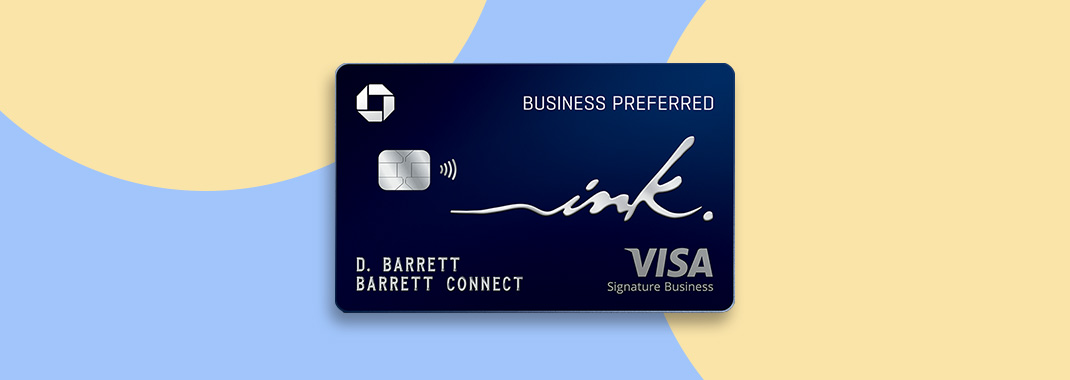
Chase Ink Business Preferred
Apply at creditcards.chase.com. Chase has a 5/24 rule — if you've opened 5+ personal credit cards in the past 24 months, you may be auto-denied. Business cards don't count toward the 5/24 count themselves but do count if Chase reports them to personal bureaus.
The Chase Ink Business Preferred is the best mid-tier business card. $95 annual fee, 3x Ultimate Rewards points on travel, shipping, internet/phone/cable, and advertising up to $150K combined annually (then 1x). The transferable Ultimate Rewards points are the key — paired with a Sapphire Reserve at home, they redeem for 1.5-2 cpp via airline/hotel transfers. The 100K bonus point sign-up offer is regularly available and worth $1,000-$2,000.
Pros
- ✓3x on 4 business-relevant categories up to $150K
- ✓Transferable Ultimate Rewards points (1.5-2 cpp redemption)
- ✓100K bonus point sign-up offer regularly available
Cons
- ✗3x cap at $150K combined across 4 categories
- ✗Annual fee not waivable

Apply at capitalone.com. Capital One does a hard pull on personal credit. The Spark Cash Plus requires good-to-excellent personal credit (700+ FICO typically).
The Capital One Spark Cash Plus is the simplest, most predictable business card. $150 annual fee, unlimited 2% cash back on everything, no foreign transaction fees, $1,000 welcome bonus when you spend $30K in 3 months. Cash back is straight cash — no point conversion, no category tracking. For businesses where category mapping isn't worth the effort, this is the right pick.
Pros
- ✓Unlimited 2% cash back on all spend
- ✓Simplest rewards structure
- ✓No foreign transaction fees
Cons
- ✗No travel partner transfers (cash back only)
- ✗Less optimized than category-based cards for high-category-spend businesses
Subscribe to our newsletter
Occasional updates and new releases — no spam.
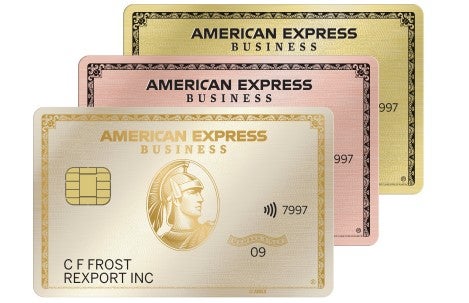
Apply at americanexpress.com. The Membership Rewards points transfer to 15+ partners — best redemption value via Aeroplan, ANA, or Avianca LifeMiles for international business class flights.
The Amex Business Gold is the right card for ad-heavy businesses (digital ads, marketing agencies, e-commerce). $375 annual fee, 4x Membership Rewards on your top 2 spending categories each month from a list of 6 (advertising, gas, restaurants, transit, US computer hardware, US shipping). At 4x with transferable Membership Rewards points (1.5-2 cpp), it can earn 6-8% effective return on advertising spend. The flexibility of monthly category selection is unique.
Pros
- ✓4x on top 2 categories monthly (auto-selected from 6)
- ✓Transferable Membership Rewards points
- ✓$240 in usable annual credits (Flexport, Grubhub)
Cons
- ✗$375 fee is higher than mid-tier alternatives
- ✗Categories tracked monthly, not annually

Apply at brex.com. Brex requires business bank account access (read-only via Plaid) and underwrites based on business cash balance and revenue. Best for VC-backed startups or established small businesses with $50K+ in business bank accounts.
Brex Card is the right card for VC-backed startups that can't accept personal-guarantee terms. $0 annual fee, no personal guarantee (underwriting based on business cash balance), 7x on rideshare (Uber, Lyft), 4x on Brex Travel (their travel portal), 3x on restaurants, 1x on everything else. Setup is instant once business banking is connected. The trade-off is that Brex requires Net-30 daily payment terms by default (you can apply for Net-60), which works for businesses with strong cash management but is restrictive otherwise.
Pros
- ✓No personal guarantee required
- ✓$0 annual fee
- ✓7x on rideshare, 4x on Brex Travel
Cons
- ✗Net-30 daily payment terms by default
- ✗Requires business bank account with reasonable balance
- ✗Rewards rate lower than Amex/Chase for most spend categories
Which one is right for you?
Executives and managers who fly frequently for work
Amex Business Platinum
Earns 5x points on airfare and provides Centurion lounge access, cutting the effective $695 fee to under $200 when travel credits are used.
Small business owners who want straightforward cash back
Capital One Spark Cash Plus
Unlimited 2% cash back on every purchase with no category tracking needed — ideal for businesses that want predictable, simple rewards.
Digital marketing agencies and e-commerce businesses
Amex Business Gold
Earns 4x Membership Rewards on advertising spend (auto-selected monthly), delivering 6-8% effective return on ad budgets.
Cost-conscious SMB owners who also travel occasionally
Chase Ink Business Preferred
3x points on travel, shipping, internet, and advertising at just $95/year, with transferable Ultimate Rewards worth up to 1.5-2 cents per point.
VC-backed startup founders avoiding personal liability
Brex Card
No personal guarantee required — underwriting is based on business cash balance, making it the only option for founders who cannot accept personal credit risk.
Effective net rewards on $250K spend
Capital One Spark Cash Plus: $5,000 cash back (2% flat) − $150 fee = $4,850 net. Simple, predictable.
Chase Ink Business Preferred: ~$6,200 in points (3x on travel/shipping/internet/advertising, 1x elsewhere) − $95 fee = $6,105 net at 1.0 cpp redemption value; ~$9,265 net at 1.5 cpp via Chase Sapphire Reserve transfer to partners.
Amex Business Platinum: ~$8,500 in points + $1,200 in usable credits (lounge, $200 airline, $400 Dell, $360 Indeed, etc.) − $695 fee = $9,005 net (if credits used). Headline rewards rate is mediocre, but the credits stack to a high effective return for businesses that can use them.
Amex Business Gold: ~$7,200 in points (4x on top 2 categories) − $375 fee = $6,825 net. The 4x on Amex's choosable categories (advertising, gas, restaurants, etc.) make it strong for ad-heavy businesses.
Brex Card: ~$4,500 in points (variable category multipliers) − $0 fee = $4,500 net. Best for startups that can't get personal-guarantee cards.
Personal guarantee vs. corporate liability
Amex (all three cards) and Chase Ink require a personal guarantee — you're personally liable if the business defaults. This is the standard for small business credit cards in the US.
Capital One Spark also requires personal guarantee. Brex is the exception — they offer cards based on business cash balance, with no personal guarantee. This is critical for VC-backed startups whose founders can't accept additional personal liability.
Personal guarantee credit cards report to personal credit bureaus if you default — they can damage personal FICO even though the card is in the business name.
Best for each use
Best premium travel: the Amex Business Platinum at $695 annual fee. Five times points on airfare, $200 airline credit, lounge access (Centurion + Priority Pass), and $1,200+ in usable annual credits if you do business travel.
Best mid-tier all-rounder: the Chase Ink Business Preferred at $95. 3x on travel/shipping/internet/advertising up to $150K combined annually, transferable Ultimate Rewards points worth 1.5 cpp+ for many transfers.
Best flat-rate cash back: the Capital One Spark Cash Plus at $150. Unlimited 2% cash back on everything. Simplest, most predictable.
Best for ad-heavy businesses: the Amex Business Gold at $375. 4x on Amex's choosable categories (you select 2) including advertising, gas, restaurants, transit, computer hardware, shipping.
Best for startups without personal guarantee: the Brex Card at $0. Based on business cash balance, no personal guarantee, 7x on rideshare and 4x on Brex Travel.
Frequently asked questions
What's the difference between business and personal credit cards?▼
Can I use a business credit card for personal expenses?▼
Do business credit cards affect my personal credit?▼
What credit score do I need for a business credit card?▼
Prices change. Check the retailer for the current price.
Comments & questions
Discussion happens on nattzy, our community forum. Sign in with Google to post — it takes a second.
Related articles

Best Rewards Credit Cards 2026: 5 Compared for Points

Best Credit Monitoring Services in 2026: Ranked

Best Electric Toothbrush 2026: 5 models compared honestly

Best Air Purifier 2026: 5 models compared honestly

ConoHa WING review (2026): setup, speed and pricing
Best JP rental server 2026: 5 hosts ranked