Best Sunrise Alarm Clock 2026: 5 Wake-up Lights Compared
A sunrise alarm clock replaces the jolt of a beeping alarm with a room that slowly gets brighter before you have to get up. Whether it works for you comes down to three things: how bright it gets, how much you want to depend on an app, and whether it looks right on your nightstand.
Quick answer
The Hatch Restore 3 is the sunrise alarm to buy for most people: it combines a sunrise alarm, a large sound library and a reading light in a calm-looking unit, all set from your phone. The Philips SmartSleep HF3520 is the pick if you want a brighter, dedicated wake-up lamp with no app at all, the Lumie Bodyclock Shine 300 gives the most control over sunrise and sunset length, the Loftie Clock is for keeping the phone out of the bedroom, and the Philips HF3505 is the cheapest real sunrise lamp from a major brand.
We did not test these sunrise alarm clocks ourselves. Doing it properly would mean measuring light output with a lux meter at pillow distance, timing sunrise curves and living with each clock for weeks — none of which we did. Instead we compared the manufacturers' published specifications (sunrise duration, brightness levels, sounds, radio, app requirements), checked current prices at major US retailers, and read owner reviews at volume, keeping only complaints that recur across many buyers — app or subscription frustration, displays too bright at night, button placement, alarm volume — rather than one-off impressions. Brightness and feature figures are the makers' own.
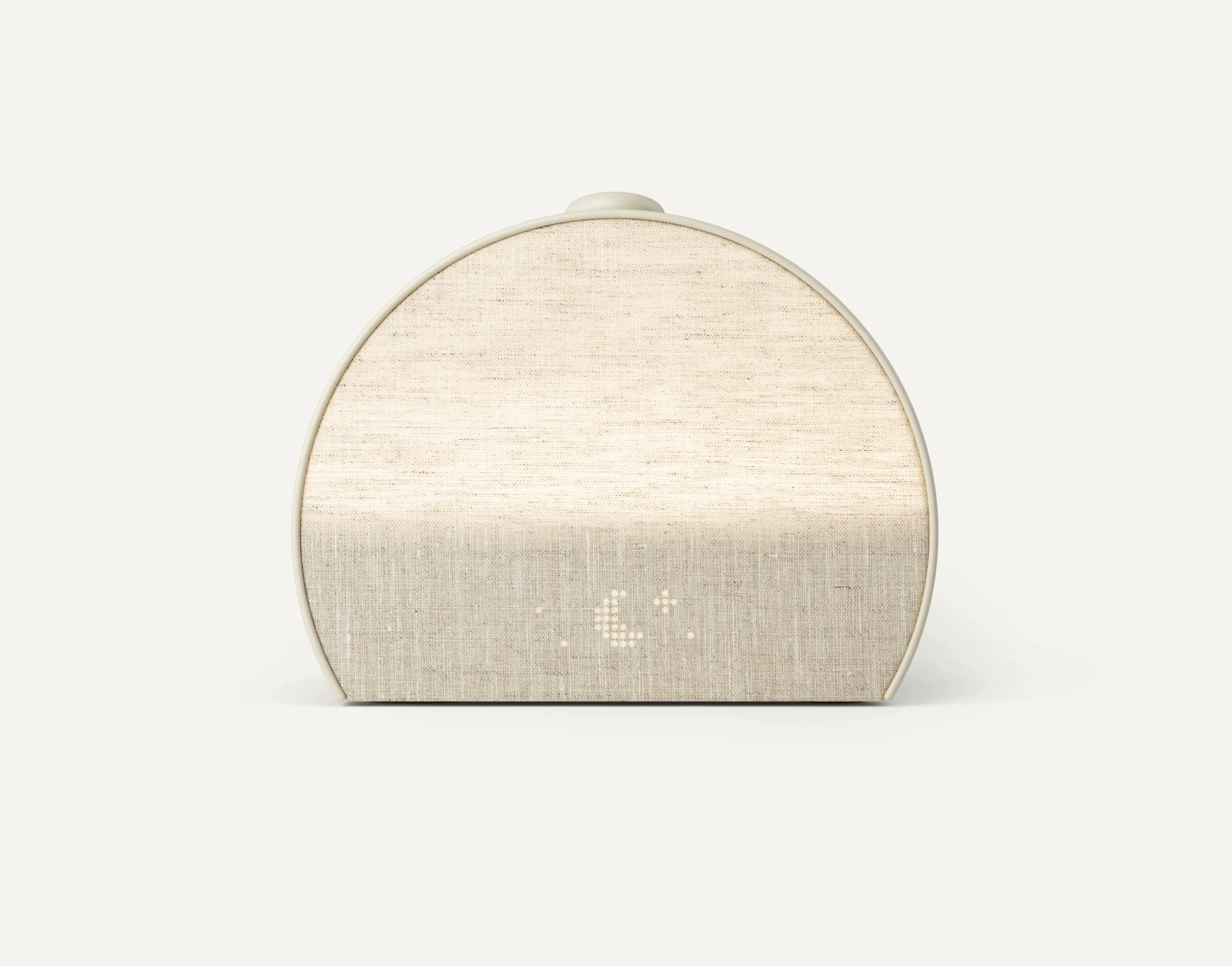
🏆 Best overall: The Hatch Restore 3 is the best fit for most bedrooms because it does several bedside jobs well in one calm, fabric-covered unit: a sunrise alarm, a reading light and a large library of sleep sounds, with routines scheduled from the Hatch app. The light is softer than a dedicated wake-up lamp, so heavy sleepers should pair it with a sound.
Top picks ↓| Product | Price | Link |
|---|---|---|
| $150〜$170Reference price | ||
| $130〜$180Reference price | ||
| $190〜$230Reference price | ||
| $150〜$170Reference price | ||
| $80〜$110Reference price |
Top picks
Related articles

Sold in several fabric colours; the Hatch+ subscription is optional and not needed for the sunrise alarm.
The Hatch Restore 3 is the best fit for most bedrooms because it does several bedside jobs well in one calm, fabric-covered unit: a sunrise alarm, a reading light and a large library of sleep sounds, with routines scheduled from the Hatch app. The light is softer than a dedicated wake-up lamp, so heavy sleepers should pair it with a sound. The most common complaints are needing the app for setup and that some content sits behind the optional Hatch+ subscription.
Pros
- ✓Sunrise, sounds and reading light in one
- ✓Easy routines through the app
- ✓Calm, fabric-covered design
Cons
- ✗App needed for setup
- ✗Some content behind a subscription

Philips SmartSleep Wake-up Light HF3520
Check the model number is HF3520; similar-looking Philips models have fewer features.
The Philips SmartSleep HF3520 is the classic choice for a bright, app-free sunrise. It simulates a coloured sunrise that moves from red through orange to bright yellow, has 20 brightness levels, a sunset for bedtime, five natural sounds and FM radio, and everything is controlled on the unit. Owners like how bright it gets; the recurring complaints are a fairly large footprint on a small nightstand and a radio that some find hard to tune.
Pros
- ✓Bright, coloured sunrise
- ✓No app or account needed
- ✓Sunset feature for bedtime
Cons
- ✗Takes up nightstand space
- ✗Radio tuning can be fiddly

Make sure the listing is for the US plug version.
The Lumie Bodyclock Shine 300 is for people who want to fine-tune the light. Sunrise and sunset length are adjustable, you can choose between wake-up sounds, and the display dims at night. Lumie specialises in light products, and the dome gives a strong, even glow. It is the most expensive clock here, and owners mention that the menu takes a while to learn.
Pros
- ✓Adjustable sunrise and sunset length
- ✓Strong, even dome light
- ✓Display dims at night
Cons
- ✗Highest price here
- ✗Menu takes time to learn
Subscribe to our newsletter
Occasional updates and new releases — no spam.
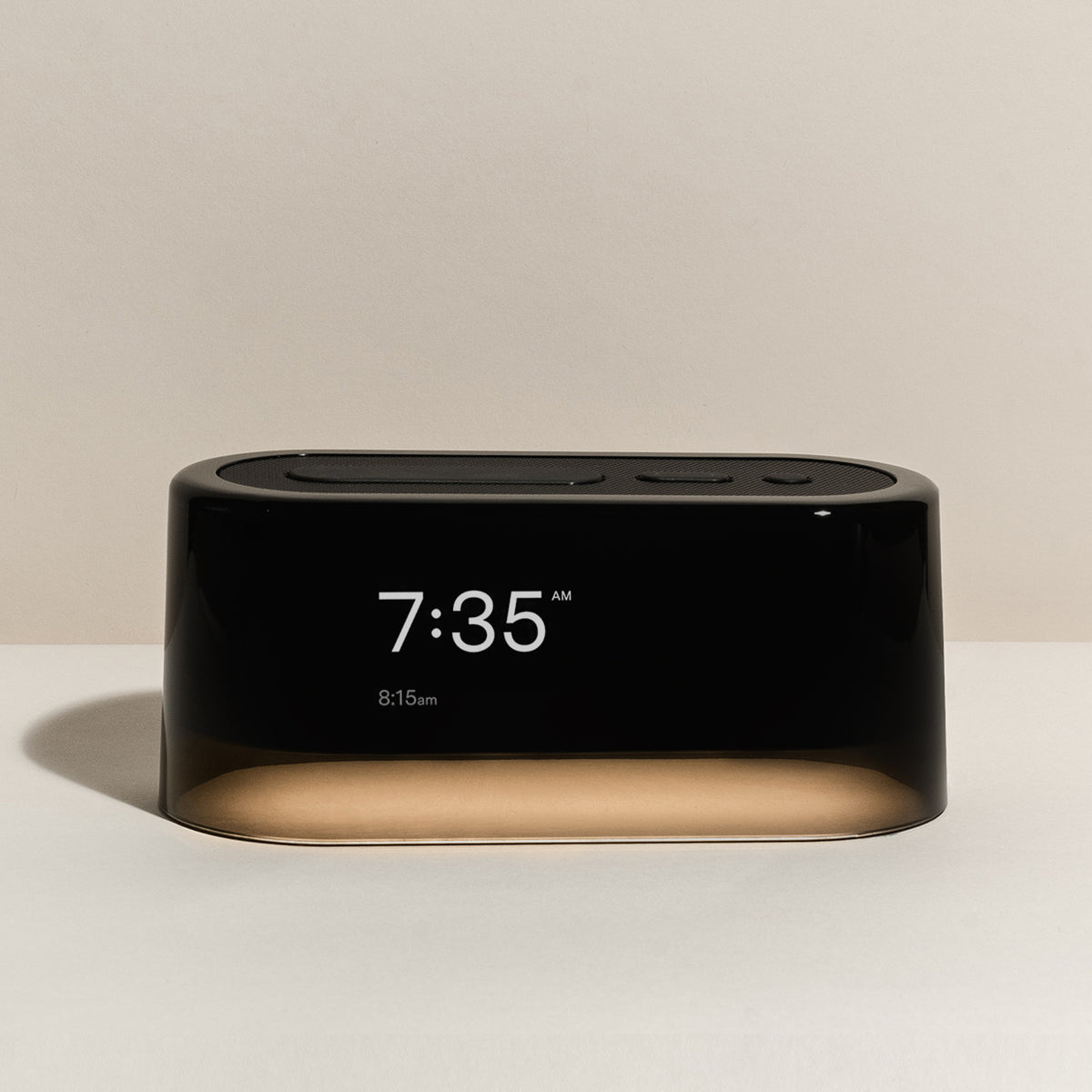
Available in several colours; check the listing is the Loftie Clock, not the Loftie Lamp.
The Loftie Clock is built for people who want the phone out of the bedroom. It has a two-phase alarm — a gentle wake-up sound, then a get-up sound — built-in sleep sounds and white noise, and a soft wake-up glow, all run from buttons on the unit. The light is gentle rather than bright, so it is a mood light more than a sunrise lamp. Owners also mention a learning curve on the controls.
Pros
- ✓Two-phase alarm
- ✓Sleep sounds without a phone
- ✓Minimal, attractive design
Cons
- ✗Light is dimmer than wake-up lamps
- ✗Controls take getting used to

Often discounted; confirm the listing is the HF3505 with FM radio.
The Philips HF3505 is the cheapest way to get a real sunrise lamp from a major brand. It offers a 30-minute sunrise, 10 brightness levels, two natural sounds and FM radio, with simple controls on the unit. It lacks the coloured sunrise, sunset and extra brightness steps of the HF3520, and the sunrise length is fixed. For a straightforward light-based wake-up, that is often all you need.
Pros
- ✓Lowest price for a proper wake-up lamp
- ✓Simple controls, no app
- ✓FM radio included
Cons
- ✗Fixed 30-minute sunrise
- ✗No sunset or coloured sunrise
Brightness decides whether the sunrise actually wakes you
Every clock here fades light up before the alarm, but they are not equally bright. Dome and disc lamps built specifically as wake-up lights — the Philips models and the Lumie — put out a strong, room-filling glow at full level. Clocks that are designed as all-in-one bedside devices, like the Hatch and especially the Loftie, produce a softer light that is pleasant but easier to sleep through.
If you sleep deeply, share the room with blackout curtains or want the light to be the main thing that wakes you, buy a dedicated wake-up lamp. If you mostly want a gentler start with a sound alarm as backup, a softer light is fine and every model here lets you add a sound.
App or buttons: how you set it matters every night
The Hatch Restore 3 is set up and adjusted through the Hatch app, and some extra sound content sits behind an optional Hatch+ subscription. That makes scheduling routines easy, but owners who dislike needing a phone for a clock mention it often. The Philips clocks, the Lumie and the Loftie can be run from buttons on the unit.
Think about what happens at 2 a.m.: can you snooze or turn the alarm off without looking for a phone? Tap-to-snooze tops, physical buttons and a display that dims to near-dark matter more day to day than any feature list.
Sunrise length, sunset and sounds
A sunrise of 20 to 40 minutes suits most people. Philips offers adjustable sunrise durations on the HF3520 and a fixed 30-minute sunrise on the HF3505, while Lumie lets you choose a longer or shorter sunrise and a matching sunset for winding down. A sunset feature — light that slowly dims at bedtime — is worth having if you read in bed.
Every model adds sounds for the alarm. Philips uses natural sounds and FM radio, Lumie a set of wake-up sounds, Hatch and Loftie larger libraries of sleep sounds and white noise that can also play through the night. If you already use a separate white noise machine, the extra sound library is less of a reason to pay more.
Price: what you get at each level
Sunrise alarms run from about $80 to $230. Around $80–110, the Philips HF3505 is a straightforward wake-up lamp from an established maker. At $130–180, the HF3520 adds coloured sunrise, a sunset and more brightness steps, and the Hatch and Loftie add sound libraries and design. The Lumie at the top prices in finer control and a more premium build.
Very cheap unbranded sunrise clocks exist below $40. Owner reviews for that tier often mention dim light, harsh colour steps and short lifespans, so we would rather spend a little more on a maker with support and replacement parts.
Frequently asked questions
Can a sunrise alarm clock replace a normal alarm?▼
Do I need an app?▼
Will the display keep me awake?▼
How long should the sunrise be?▼
Prices change. Check the retailer for the current price.
Comments & questions
Discussion happens on nattzy, our community forum. Sign in with Google to post — it takes a second.
Still deciding? Ask the community your own question — Post a question on nattzy ↗
Related articles

Best Aroma Diffuser 2026: 5 Compared
Best Standing Desk 2026: 5 sit-stand desks compared honestly

ConoHa WING review (2026): setup, speed and pricing
Best JP rental server 2026: 5 hosts ranked
Best LED Face Masks 2026: 3 Light Therapy Devices Compared
Best Hair Dryers 2026: 5 high-end models compared honestly