Best Lint Remover 2026: 5 Electric and Manual Picks
Pilling is not a sign that a sweater is ruined; it is loose fibres that have twisted into little balls on the surface. A good lint remover cuts those balls off without cutting the fabric underneath, and the difference between models is mostly how well they protect the knit while they work.
Quick answer
For most people the best lint remover is the BEAUTURAL Rechargeable Fabric Shaver: USB charging, two speeds, a six-leaf blade and an adjustable guard for thick and delicate fabrics, usually for about $20. If you would rather have no motor and no battery, choose the Gleener 4-in-1 Fuzz Remover; the Philips GC026 is the pick for big jobs like blankets and sofas; the Conair Fabric Shaver is the cheapest name-brand option; and the Steamery Pilo Icon is the premium choice for people who look after a wardrobe of good knitwear.
We did not test these lint removers ourselves. An honest test would mean pilling identical swatches of wool, cotton and synthetic knits, shaving them under the same pressure and then checking for thinning and holes over repeated washes, and we did none of that. What we did: we took every specification from the manufacturers' product pages (power source, blade design, guard, lint chamber, accessories), checked real selling prices at major US retailers, and read owner reviews at scale, keeping only complaints that repeat across many buyers — snagged or thinned fabric, weak motors, batteries, blades that dull — rather than first-use impressions. Where a figure is the maker's claim, we say so.

🏆 Best overall: The BEAUTURAL is our pick because it combines the features that matter most at a budget price. It charges over USB, so there are no batteries to buy, it has two speeds, and the six-leaf blade sits behind a guard whose height can be adjusted for thick sweaters or finer fabrics.
Top picks ↓| Product | Price | Link |
|---|---|---|
| $15〜$25Reference price | ||
| $18〜$25Reference price | ||
| $15〜$22Reference price | ||
| $12〜$18Reference price | ||
| $50〜$65Reference price |
Top picks
Related articles

Several colours and bundle versions are listed; check whether spare blades are included.
The BEAUTURAL is our pick because it combines the features that matter most at a budget price. It charges over USB, so there are no batteries to buy, it has two speeds, and the six-leaf blade sits behind a guard whose height can be adjusted for thick sweaters or finer fabrics. The removable lint chamber is easy to empty. It is a popular budget choice, and the repeated complaints are the ones you would expect at this price: battery life that shortens after heavy use, and a smallish head that is slow on large blankets.
Pros
- ✓USB rechargeable, no batteries to buy
- ✓Two speeds and an adjustable height guard
- ✓Easy-to-empty lint chamber
Cons
- ✗Battery life shortens with heavy use
- ✗Small head is slow on blankets
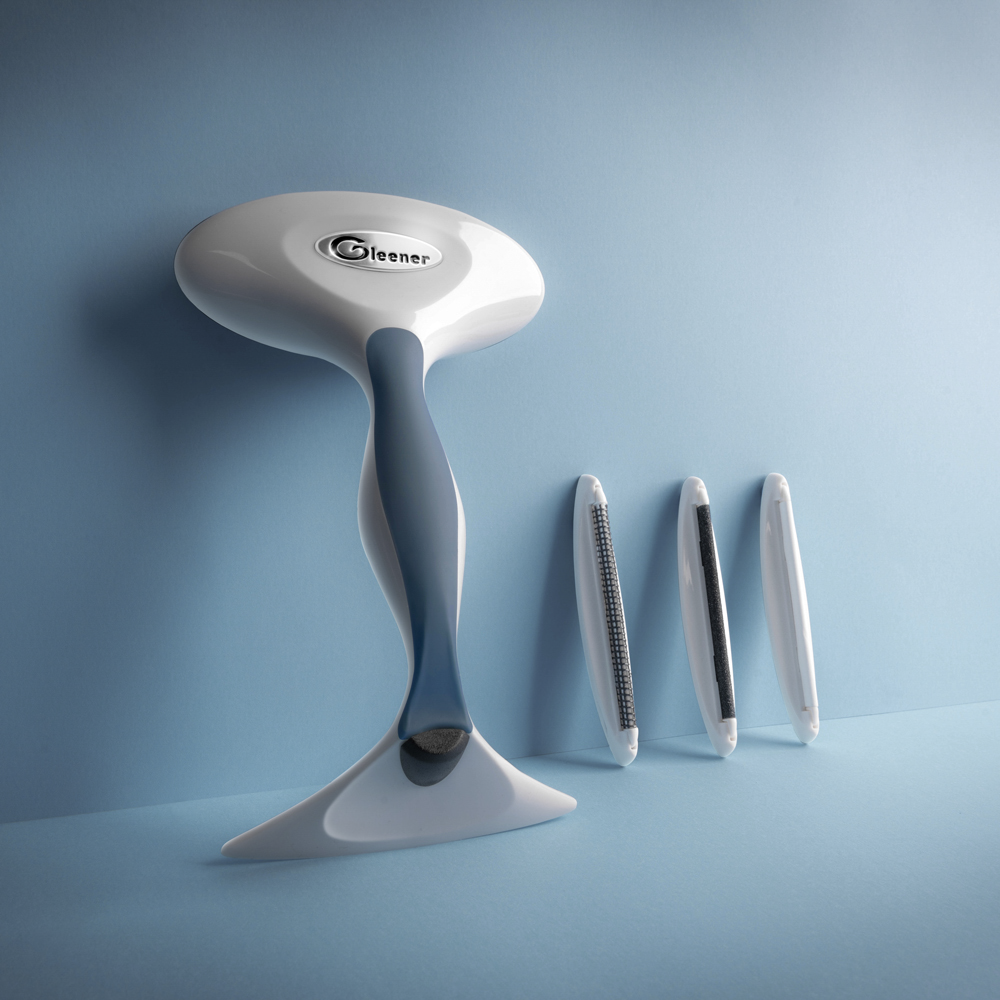
Make sure the listing includes all three Fabric-Safe Edges; replacement edges are also sold separately.
The Gleener suits people who want no motor, no battery and full control. It comes with three interchangeable Fabric-Safe Edges for fine, medium and thick knits, and the other end is a lint brush for hair and fluff. Because you draw it across the fabric by hand, it is slower than an electric shaver on big jobs, but many owners prefer it for good wool sweaters and coats. The recurring complaints are that it takes some practice to find the right edge and angle, and that it is tiring on a whole blanket or sofa.
Pros
- ✓No battery or motor to fail
- ✓Three edges for different knit thicknesses
- ✓Built-in lint brush
Cons
- ✗Slow on large areas
- ✗Takes practice to find the right edge

Two AA batteries are included; the colour can vary by seller.
The Philips GC026 is the choice for blankets, throws and sofa cushions. Its large shaving surface covers big areas quickly, it has a height guard for thicker fabrics and a removable lint compartment, and it runs on two AA batteries that come in the box. As with any battery shaver, owners notice it slowing as the batteries weaken, and the wide head is less nimble around cuffs, seams and small garments than a compact model.
Pros
- ✓Large shaving surface for big jobs
- ✓Height guard for thick fabrics
- ✓Batteries included
Cons
- ✗Slows down as AA batteries weaken
- ✗Wide head is awkward on small items
Subscribe to our newsletter
Occasional updates and new releases — no spam.

Several similar Conair fabric shavers are sold; check the listing for the 2-inch head and depth settings.
The Conair is the cheapest way to get a name-brand fabric shaver. It has a 2-inch shaving head, three depth settings and a see-through lint catcher so you can tell when to empty it, and it runs on batteries. It is a good occasional tool for a few sweaters. Reviews repeatedly mention that the motor is weaker than rechargeable models and struggles with very thick pilling, and that it needs frequent emptying.
Pros
- ✓Lowest price in this list
- ✓Three depth settings
- ✓See-through lint catcher
Cons
- ✗Weaker motor on heavy pilling
- ✗Small chamber needs frequent emptying

Availability varies by country; the earlier Pilo 2 is also still sold and is cheaper.
The Steamery Pilo Icon is the premium pick from the Swedish clothing-care brand, and the successor to the Pilo 2. It charges over USB-C, has a replaceable battery rather than a sealed one, and comes with two mesh covers so you can switch between fine and chunky knits, plus a dust bag and a cleaning brush. It costs about three times as much as the budget shavers, and you are paying partly for design and build; it makes sense if you look after a lot of good knitwear, much less for occasional use.
Pros
- ✓Replaceable battery and USB-C charging
- ✓Two mesh covers for fine and chunky knits
- ✓Well-made, with storage bag and brush
Cons
- ✗About three times the price of budget models
- ✗Availability varies by country
Electric shaver or manual de-piller: the first choice
Electric fabric shavers work like a small rotary razor: a spinning blade sits behind a perforated metal guard, pills poke through the holes and get cut off, and the fluff collects in a chamber. They are fast on large, flat areas such as sweater bodies, blankets and sofa cushions, and they need little skill. The trade-off is that a motor and a sharp blade can cut into loose or delicate knits if you press too hard.
Manual de-pillers such as the Gleener use a fixed edge or a fine comb that you draw across the fabric. They are slower on big areas, but you control every stroke, there is no battery to run down, and many people find them gentler on fine wool and cashmere. If most of what you de-pill is a few favourite sweaters, a manual tool is often enough; if you also want to refresh throws, couches and kids' clothes, an electric shaver saves a lot of time.
Match the tool to the fabric
Thick, sturdy knits such as chunky wool, fleece and cotton sweatshirts tolerate electric shavers well, especially with the guard raised so the blade stays further from the surface. Fine merino, cashmere and loosely knitted or mohair-style yarns are where damage happens: long, fluffy fibres can be pulled into the guard and cut. For those, use the gentlest setting or a manual tool, and work with very light pressure.
Always try a new lint remover on a hidden area first, such as inside a hem or under an arm. Avoid anything with a raised pattern, embroidery, sequins or loose loops, and do not use a shaver on fabrics with a nap you want to keep, such as velvet. Upholstery is usually fine with a large shaving head, but check the sofa maker's care label before you start on a whole cushion.
The specs that matter: guard, blade, power and chamber
The guard matters more than the motor. A guard with small, even holes and an adjustable height lets you set how close the blade gets to the fabric; that is the main difference between cheap no-name shavers and the models on this list. A larger shaving surface, like the one on the Philips GC026, covers blankets and sofa cushions faster, while a smaller head is easier to steer around seams and cuffs.
Power is a practical choice. Rechargeable models such as the BEAUTURAL and the Steamery Pilo Icon keep a steady speed until the battery runs down and save you buying batteries; AA-powered models such as the Philips and Conair are cheaper and can be kept running with spare batteries, but slow down as the batteries weaken. Whatever you choose, look for a lint chamber that is easy to empty, because a full chamber is the most common reason a shaver suddenly seems to stop working.
Price bands and common mistakes
About $12 to $25 buys a perfectly good electric shaver or manual de-piller from a known brand, and for most households that is all you need. Around $50 and up, as with the Steamery Pilo Icon, you pay for design, build quality, a replaceable battery and accessories; it is worth it if you care for a lot of good knitwear, not for occasional use.
The mistakes that show up most in reviews are pressing down hard (the weight of the device is enough), shaving fabric that is bunched up or stretched instead of laid flat on a table, shaving delicate knits on the closest setting, and ignoring a full lint chamber or a dull blade. Laying the garment flat, using slow circular or straight strokes and emptying the chamber often avoids most of the complaints about holes.
Frequently asked questions
Will a fabric shaver damage my sweater?▼
Can I use a lint remover on a sofa or blanket?▼
How often should the blades be replaced?▼
What is the difference between a lint roller and a lint remover?▼
Prices change. Check the retailer for the current price.
Comments & questions
Discussion happens on nattzy, our community forum. Sign in with Google to post — it takes a second.
Still deciding? Ask the community your own question — Post a question on nattzy ↗
Related articles

Best Aroma Diffuser 2026: 5 Compared
Best Standing Desk 2026: 5 sit-stand desks compared honestly

Best Electric Toothbrush 2026: 5 models compared honestly

ConoHa WING review (2026): setup, speed and pricing
Best JP rental server 2026: 5 hosts ranked
Best LED Face Masks 2026: 3 Light Therapy Devices Compared