Best Squat Racks 2026: Rogue vs REP Fitness vs Titan
You cleared 140 kg on your last squat session and you're done driving to a commercial gym at 6am. Weight range and build quality determine long-term value far more than feature lists.
Quick answer
The Rogue RM-3 is the reference rack: 11-gauge 3x3-inch Monster steel that shows zero perceptible flex under 150-plus kg, with 1-inch Westside hole spacing through the bench and squat zone and the largest accessory ecosystem in the category. The REP PR-4000 matches those specs and a 1,000 lb rating at roughly half the price, the Titan T-3 Short uses 72-inch uprights for 8-foot garages, the Fitness Reality 810XLT includes a cable pulley, and the CAP FM-CS8000F is the cheapest safe entry.
Each rack was assessed on steel gauge and upright tube size under loads representative of serious home gym use (100–180 kg), hole spacing precision in the squat and bench zone, safety bar catch reliability, footprint practicality for garage and basement spaces, and accessory ecosystem depth.
Best Overall: The RM-3's 11-gauge 3x3-inch Monster steel produces zero perceptible flex at loads most home gym athletes will ever attempt — the stiffness isn't marketing, it's immediately felt under 150+ kg. Westside hole spacing (1-inch in bench/squat zone) lets you dial in the exact safety bar position without compromise.
Top picks ↓| Product | Steel gauge | Hole spacing | Height | Footprint | Attachments compatible | Weight capacity |
|---|---|---|---|---|---|---|
| Rogue RM-3 Monster Rack 2.0 | 3 x 3 in, 11-gauge steel | 2 in on-center (uprights) | 80 / 90 / 100 / 108 in (upright options) | 40 x 53 in (30 in depth model); 36 x 53 in (24 in depth model) | All Rogue Monster series attachments | — |
| REP Fitness PR-4000 Power Rack | 3 x 3 in, 11-gauge steel | 1 in (Westside) in bench zone, 2 in elsewhere | 80 in or 93 in (upright options) | 50.8 in wide; depth options 24 / 30 / 41 in | REP 4000-series attachments | 1,000 lb rackable |
| Titan Fitness T-3 Short Power Rack | 2 x 3 in, 11-gauge steel | 1 in (Westside) in bench zone, 2 in above and below | 82 in | 54 in W x 32.75 in D (24 in depth model; ~46 in across uprights) | Titan T-3 series attachments | 1,100 lb rackable |
| CAP Barbell Deluxe Power Rack FM-CS8000F | 12- and 14-gauge steel | — | 85 in | 61.4 in W x 45.6 in D | — | 500 lb combined (300 lb bar catches, 300 lb pull-up bar) |
| Fitness Reality 810XLT Power Cage | 2 x 2 in, 14-gauge steel | — | 83 in (~75 in with pull-up bar reversed) | ~50 x 43.25 in (L x W) | Optional/included lat pulldown, low-row cable pulley, and leg hold-down (proprietary) | 800 lb cage; 270 lb attachments |
Top picks
Related articles
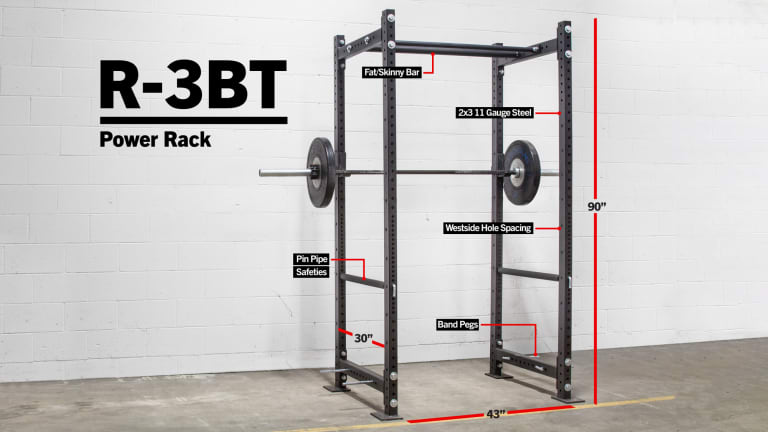

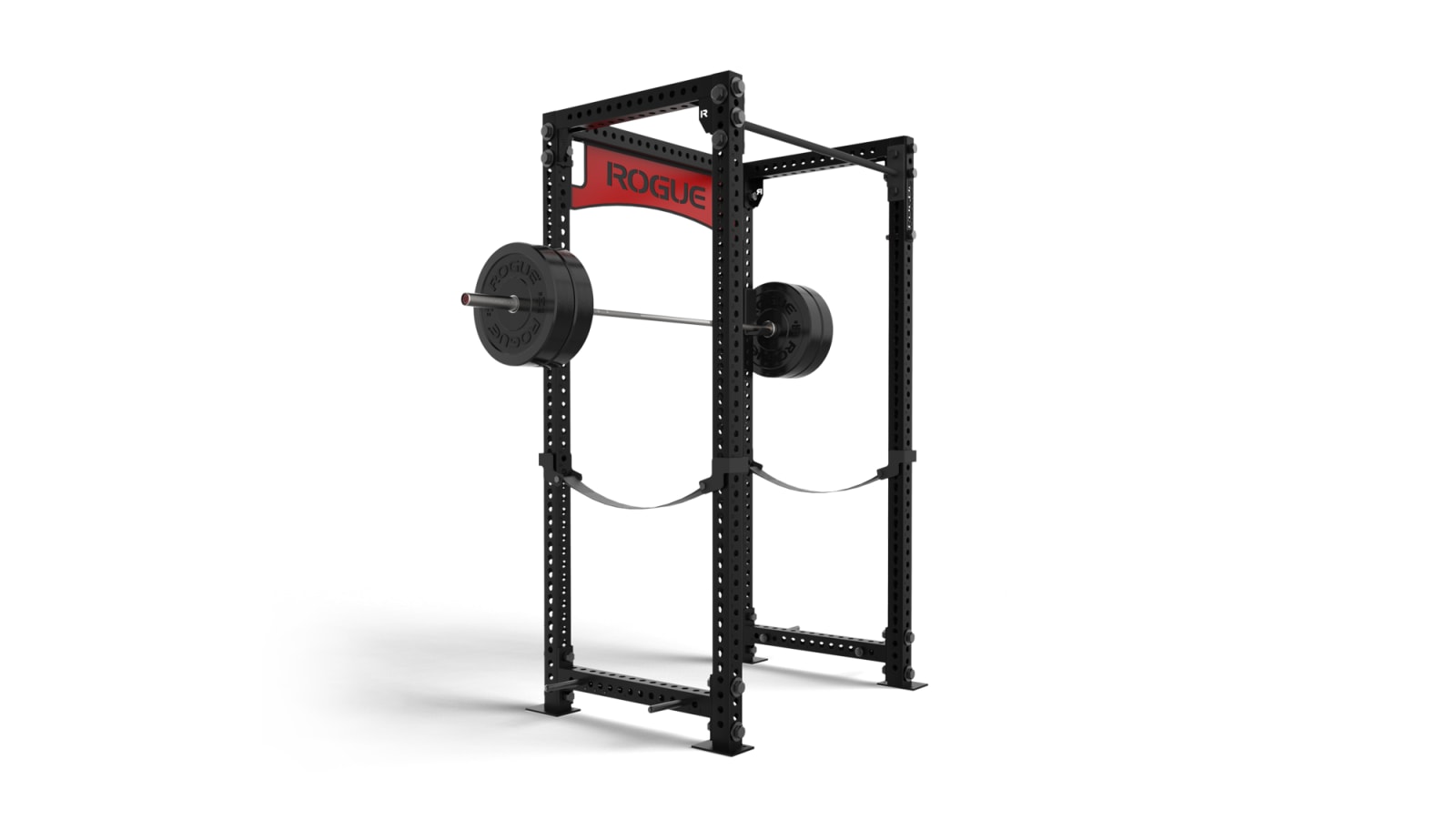
The industry benchmark for home gym power racks. 11-gauge 3x3-inch Monster steel, 1-inch Westside hole spacing, and a full accessory ecosystem that justifies the premium for lifters building a permanent setup.
The RM-3's 11-gauge 3x3-inch Monster steel produces zero perceptible flex at loads most home gym athletes will ever attempt — the stiffness isn't marketing, it's immediately felt under 150+ kg. Westside hole spacing (1-inch in bench/squat zone) lets you dial in the exact safety bar position without compromise. Trade-off: the $1,000+ price and 57 × 46-inch base footprint require both budget and space commitment; this rack is permanent furniture.
Pros
- ✓11-gauge 3x3-inch Monster steel — zero flex under home gym loads
- ✓1-inch Westside hole spacing throughout bench and squat zone
- ✓Largest accessory ecosystem in the category
Cons
- ✗Premium price and large footprint require serious space commitment
Score breakdown
| Steel gauge | 3 x 3 in, 11-gauge steel |
| Hole spacing | 2 in on-center (uprights) |
| Height | 80 / 90 / 100 / 108 in (upright options) |
| Footprint | 40 x 53 in (30 in depth model); 36 x 53 in (24 in depth model) |
| Attachments compatible | All Rogue Monster series attachments |
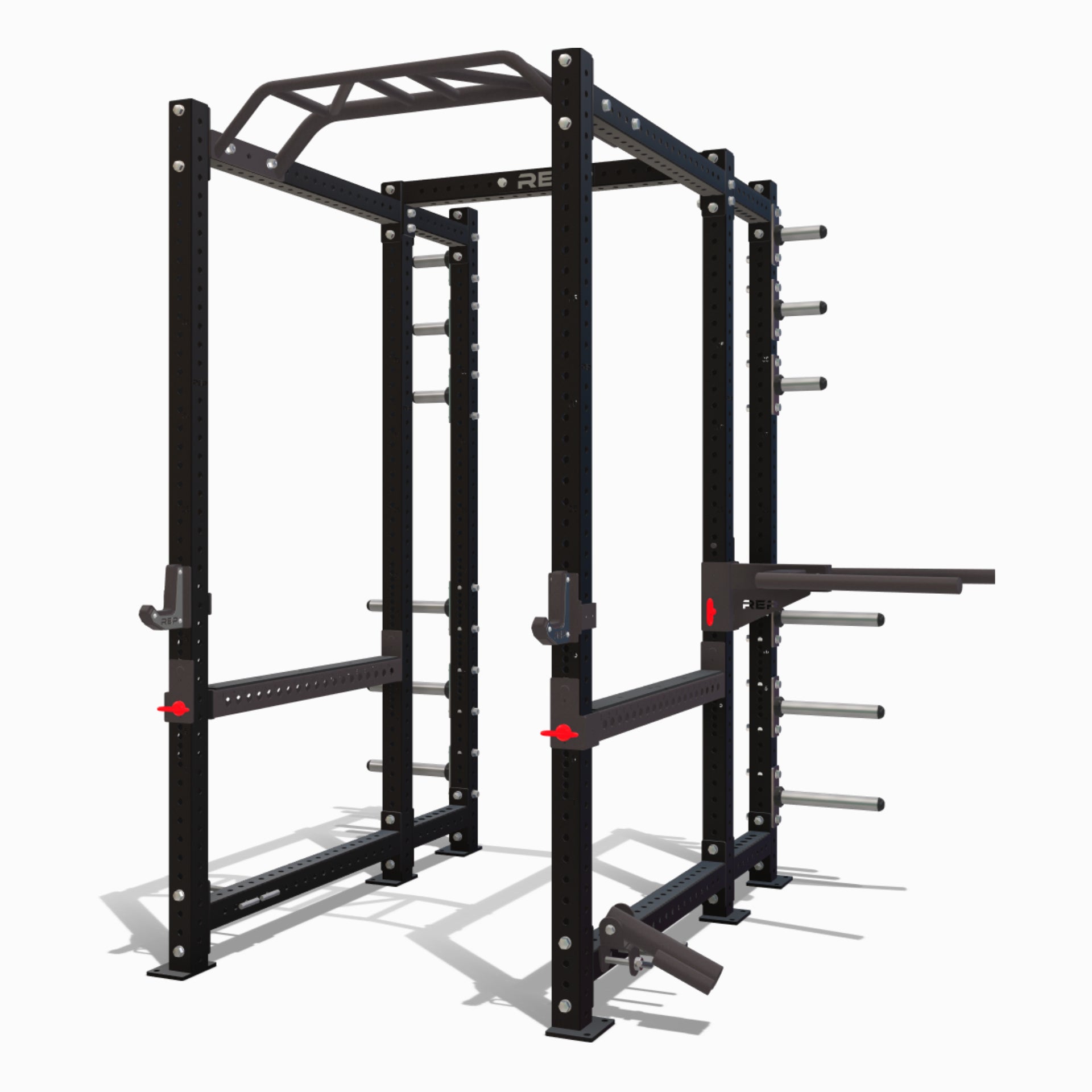
REP's best-value competition to Rogue — same 11-gauge 3x3-inch construction and 1-inch Westside spacing at roughly half the price. The closest thing to Rogue quality without the Rogue price tag.
REP matched Rogue's core specs — 11-gauge 3x3-inch steel, 1-inch Westside spacing throughout the entire upright length (not just the bench zone), 1,000 lb rating — at roughly half the price. In practice under 150+ kg loads the feel is indistinguishable from the RM-3. Trade-off: REP ships in multiple boxes requiring careful multi-step assembly, and the accessory ecosystem, while growing, is narrower than Rogue's.
Pros
- ✓Rogue-equivalent 11-gauge 3x3-inch steel at half the price
- ✓1-inch Westside spacing the full upright length
- ✓1,000 lb capacity matches Rogue
Cons
- ✗Multi-box assembly more complex; accessory ecosystem smaller than Rogue
Score breakdown
| Steel gauge | 3 x 3 in, 11-gauge steel |
| Hole spacing | 1 in (Westside) in bench zone, 2 in elsewhere |
| Height | 80 in or 93 in (upright options) |
| Weight capacity | 1,000 lb rackable |
| Footprint | 50.8 in wide; depth options 24 / 30 / 41 in |
| Attachments compatible | REP 4000-series attachments |
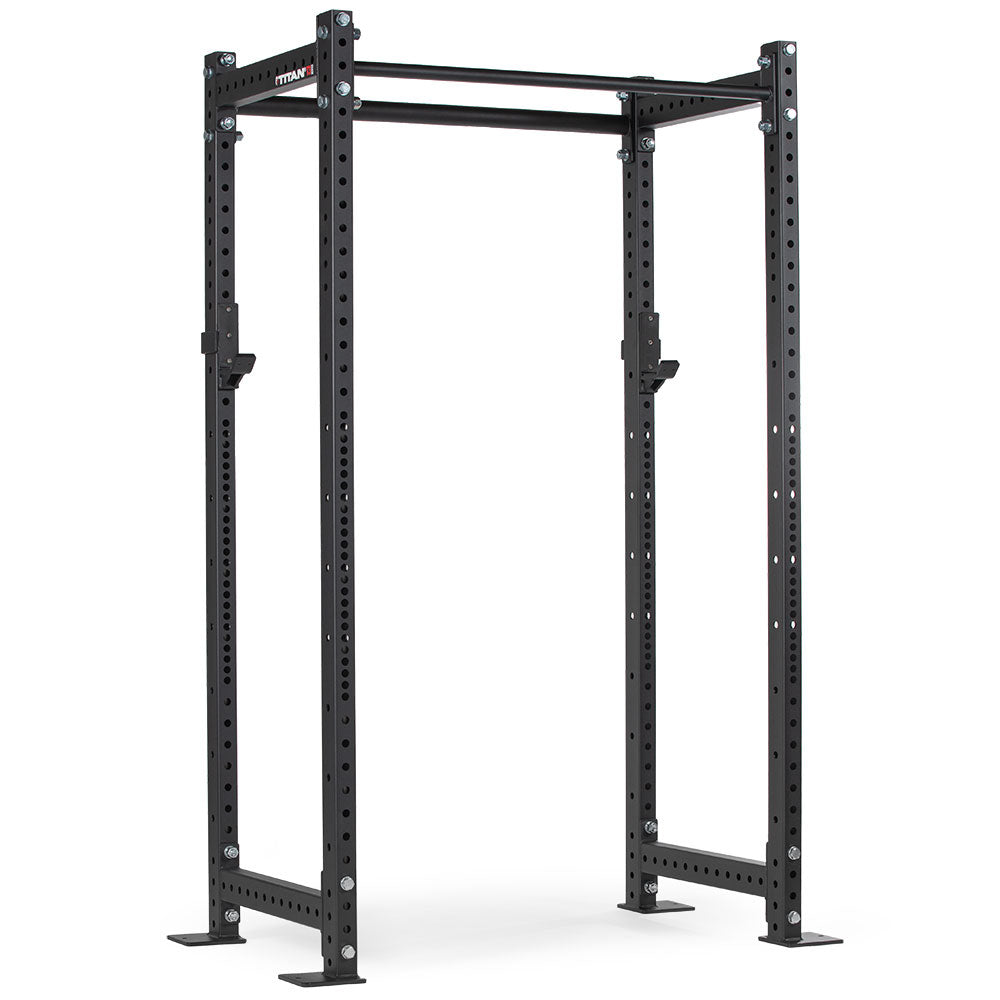
The go-to solution for garages with 8-foot ceilings. 72-inch uprights in 11-gauge 3x3-inch steel, bolt-together for mobility, and Titan's growing accessory catalog.
72-inch uprights in 11-gauge 3x3-inch steel solve the most common home gym ceiling problem — 8-foot garages that can't fit standard 84-inch racks. Westside spacing in the bench zone and bolt-together construction mean you can disassemble and move it without power tools. Trade-off: the short uprights lower the pull-up bar to a height that's tight for users over 6 feet, and overhead pressing with a barbell isn't possible in most 8-foot ceiling configurations.
Pros
- ✓72-inch uprights designed for 8-foot ceiling garages
- ✓11-gauge 3x3-inch steel matches premium rack specs
- ✓Bolt-together for disassembly and relocation
Cons
- ✗Pull-up bar too low for users over 6 feet; no barbell overhead pressing
Score breakdown
| Steel gauge | 2 x 3 in, 11-gauge steel |
| Hole spacing | 1 in (Westside) in bench zone, 2 in above and below |
| Height | 82 in |
| Weight capacity | 1,100 lb rackable |
| Footprint | 54 in W x 32.75 in D (24 in depth model; ~46 in across uprights) |
| Attachments compatible | Titan T-3 series attachments |
Subscribe to our newsletter
Occasional updates and new releases — no spam.
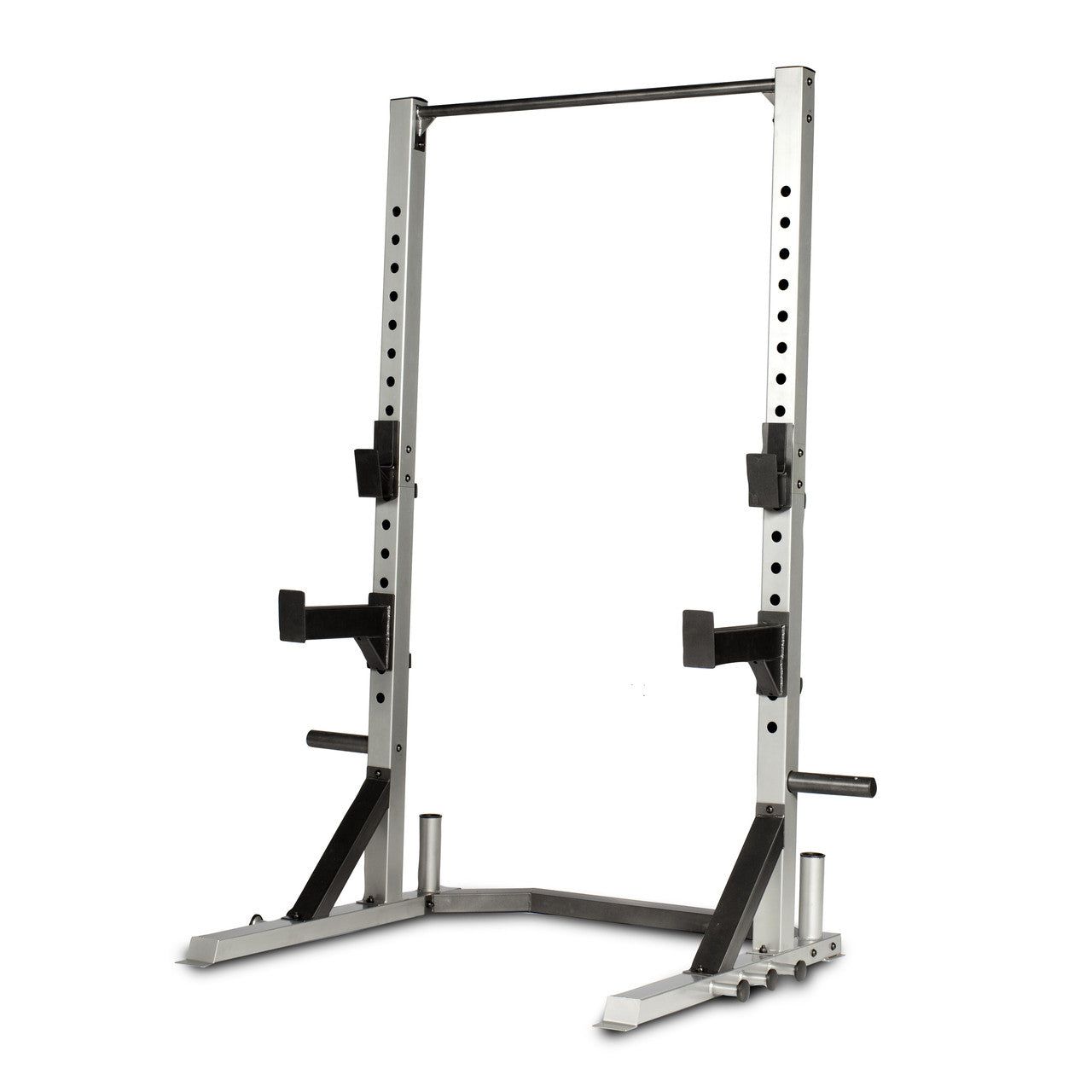
The honest entry-level option for lifters setting up their first home gym on a strict budget. Adequate for squatting under 130 kg, but step up to 11-gauge steel if you're lifting heavier.
The CAP FM-CS8000F does exactly what an entry rack must do: it holds you safely upside-down from a failed squat when you're training alone at 80-120 kg. The 14-gauge 2x2-inch steel introduces perceptible flex above 150 kg — not dangerous within rated capacity, but something heavier lifters notice. J-hooks and spotter bars included, 2-inch hole spacing throughout. Trade-off: limited accessories and no Westside spacing; plan to upgrade when you consistently squat above 130 kg.
Pros
- ✓Delivers core solo safety at the lowest price point
- ✓J-hooks and spotter bars included standard
- ✓Functional for lifters up to 120–130 kg
Cons
- ✗14-gauge 2x2-inch steel flexes above 150 kg; no Westside spacing
Score breakdown
| Steel gauge | 12- and 14-gauge steel |
| Height | 85 in |
| Weight capacity | 500 lb combined (300 lb bar catches, 300 lb pull-up bar) |
| Footprint | 61.4 in W x 45.6 in D |

The better budget pick if you want pull-ups and cable work included. 12-gauge construction, 800 lb capacity, and a built-in pulley system make this the most feature-complete rack at the entry price tier.
The Fitness Reality 810XLT edges the CAP with 12-gauge uprights (thicker than CAP's 14-gauge), an 800 lb capacity, a built-in pull-up bar, and a cable pulley system included as standard — you can do lat pulldowns and cable rows without a separate attachment purchase. Trade-off: the cable pulley develops a slight creak after 6-12 months of heavy use, and the 2-inch hole spacing throughout means no Westside precision for bench setup.
Pros
- ✓12-gauge steel — heavier than CAP's 14-gauge
- ✓Cable pulley system included for lat pulldowns and rows
- ✓800 lb capacity with built-in pull-up bar
Cons
- ✗Pulley develops creak with heavy use; 2-inch hole spacing only
Score breakdown
| Steel gauge | 2 x 2 in, 14-gauge steel |
| Height | 83 in (~75 in with pull-up bar reversed) |
| Weight capacity | 800 lb cage; 270 lb attachments |
| Footprint | ~50 x 43.25 in (L x W) |
| Attachments compatible | Optional/included lat pulldown, low-row cable pulley, and leg hold-down (proprietary) |
Which one is right for you?
For serious permanent home gyms
Rogue RM-3 Monster Rack 2.0
The Monster accessory ecosystem and competition-spec construction make it the only rack that grows with a lifter from beginner to elite without needing replacement.
For premium-quality on a budget
REP Fitness PR-4000 Power Rack
Rogue-equivalent steel and spacing at roughly half the price — the correct choice for anyone who wants competition-spec construction without the premium brand markup.
For garage gyms with 8-foot ceilings
Titan Fitness T-3 Short Power Rack
72-inch uprights solve the ceiling clearance problem that prevents standard racks from fitting in the most common residential garage height.
For first home gym on strict budget
Fitness Reality 810XLT Power Cage
Cable pulley, pull-up bar, and 12-gauge construction provide more training options per dollar than any other entry-tier rack in this comparison.
Rogue RM-3 and REP PR-4000 — Best Overall Power Racks
CAP Barbell FM-CS8000F and Fitness Reality 810XLT — Best Budget Power Racks
Titan Fitness T-3 Short — Best for Low-Ceiling Garages
How to Choose a Power Rack: Weight Capacity, Footprint, and Safety
Frequently asked questions
Half rack vs full power rack — which should I buy for a home gym?▼
How much ceiling height do I actually need for a power rack?▼
What weight capacity do I really need in a power rack?▼
Comments & questions
Discussion happens on nattzy, our community forum. Sign in with Google to post — it takes a second.