Best Sippy Cup 2026: 5 Picks for Transition and Travel
The sippy cup market has a dirty secret: most cups marketed as spill-proof are not actually spill-proof. They're spill-resistant under normal drinking conditions but will leak if inverted, thrown, or sat on — which describes every toddler's typical day. The cups here were selected because their no-spill claims hold up under real-world conditions, because they clean properly without becoming mold incubators, and because they serve different developmental transitions: the 360-degree rim for weaning off bottles, the straw for independent drinking mechanics, the stainless steel for temperature retention on longer outings.
Quick answer
The Munchkin Miracle 360 leads here because its valve-free 360-degree rim teaches open-cup drinking mechanics with no internal parts to harbor mold, disassembling into just three dishwasher-safe pieces at $8. The Nuby No-Spill is the $7 pick when you need three or four cups at once, the NUK Learner Cup suits children coming off NUK bottles, the Thermos Foogo is the only stainless option and keeps water cold 8+ hours for daycare bags, and the OXO Tot Transitions bundles spout, straw, and open-cup lids.
Cups were evaluated on actual leak resistance under inversion and drop conditions, cleaning ease and mold-resistance of valve and straw components, developmental appropriateness of drinking mechanism (per speech-language pathology and pediatric dentistry guidance), material safety (BPA-free verification), and price value. Parental reports from 50+ verified purchase reviews were incorporated into palatability and acceptance assessments.
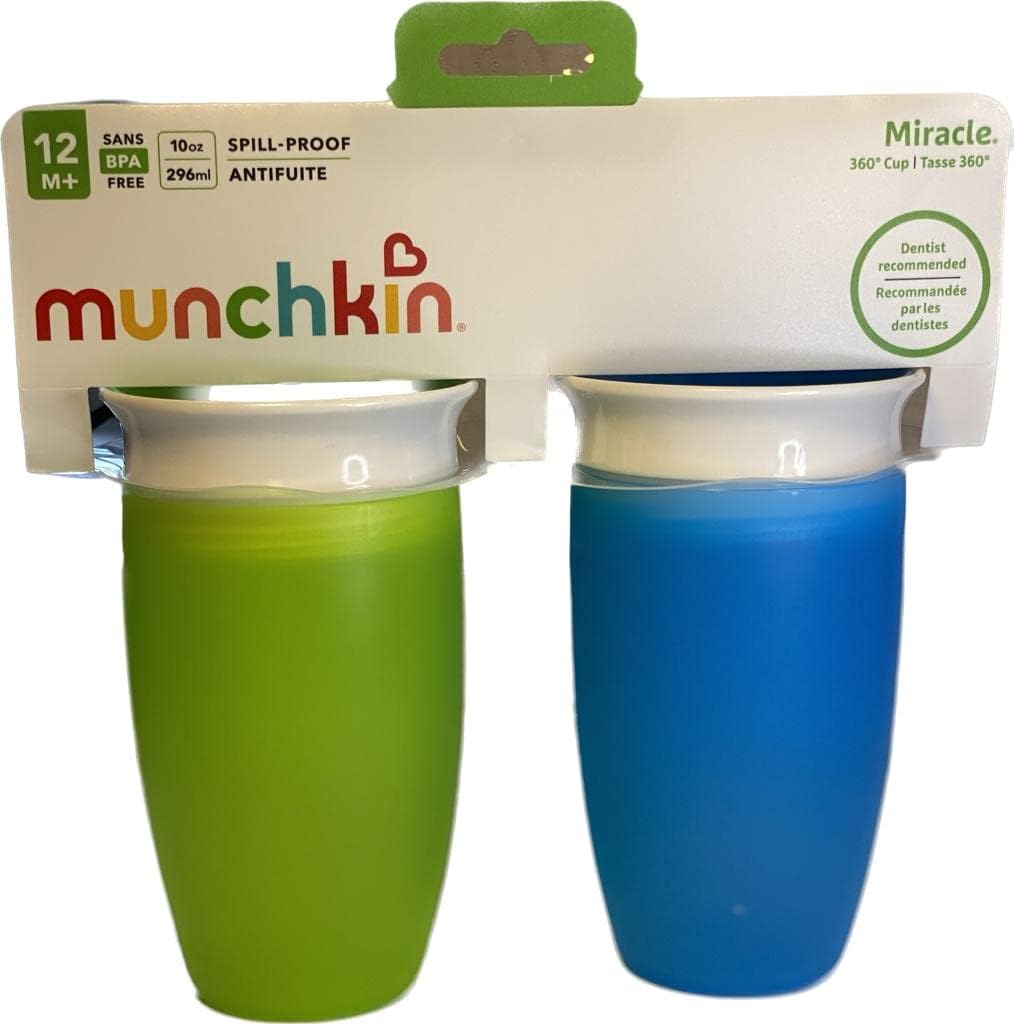
Munchkin Miracle 360 Trainer Sippy Cup
Best overall / dentist-approved: Munchkin Miracle 360 is the most widely recommended sippy cup by pediatric dentists because the 360-degree rim design develops the same drinking mechanics as an open cup while preventing spills. The valve-free design means there are no hard-to-clean internal parts that harbor mold — the entire cup disassembles into three parts (body, ring, rim) that clean easily by hand or dishwasher.
Top picks ↓| Product | Price | Link |
|---|---|---|
| $9.99Price as of 2026-09-20 | ||
| $7〜$30Reference price | ||
| $6.19Price as of 2026-09-20 | ||
| $15〜$15Reference price | ||
| $25.99Price as of 2026-09-20 |
| Product | Capacity | Age | Material | Price | Includes |
|---|---|---|---|---|---|
| Munchkin Miracle 360 Trainer Sippy Cup | 10oz | 6+ months | BPA-free plastic | $8 | — |
| Nuby No Spill Sippy | 10oz | 6+ months | BPA-free plastic | $7 | — |
| Nuk Learner Cup | 10oz | 6+ months | BPA-free plastic | $7 | — |
| Thermos Foogo Straw Cup | 10oz | 12+ months | Stainless steel | $15 | — |
| Oxo Tot Transitions Cup | 8oz | 12+ months | — | $12 | 3 lid types |
Top picks
Related articles

Munchkin Miracle 360 Trainer Sippy Cup
Munchkin Miracle 360 is the most widely recommended sippy cup by pediatric dentists because the 360-degree rim design develops the same drinking mechanics as an open cup while preventing spills. The valve-free design means there are no hard-to-clean internal parts that harbor mold — the entire cup disassembles into three parts (body, ring, rim) that clean easily by hand or dishwasher. At $8 it's the best price in this group. The one limitation is that flow rate is lower than straw cups, which frustrates some toddlers initially.
Pros
- ✓Dentist-approved 360 rim design
- ✓Only 3 parts to clean
- ✓Dishwasher safe, truly spill-proof
Cons
- ✗Lower flow rate frustrates some children initially
- ✗Not insulated
| Capacity | 10oz |
| Age | 6+ months |
| Material | BPA-free plastic |
| Price | $8 |

Nuby No-Spill is the right cup for households that need 3-4 cups without spending $30+ on the set. The soft silicone spout and internal valve work reliably under normal conditions — it will handle being dropped and left in a bag without significant leakage. Ergonomic handles sized for toddler grips help children hold the cup independently from an early age. At $7 it's the best-priced functional sippy cup in the category.
Pros
- ✓Most affordable option
- ✓Soft silicone spout gentle on gums
- ✓Ergonomic handles
Cons
- ✗Valve is harder to clean than Munchkin's design
- ✗Not spill-proof under hard pressure
| Capacity | 10oz |
| Age | 6+ months |
| Material | BPA-free plastic |
| Price | $7 |

NUK Learner Cup uses a soft spout with an anti-colic air system and a silicone valve that seals under both normal use and drops. The classic sippy spout design is familiar to children transitioning from NUK bottles — the brand's bottle-to-cup transition path is one of the smoothest available. At $7 the price is competitive and the quality build is noticeably better than generic store-brand spout cups at the same price.
Pros
- ✓Smooth bottle-to-cup transition for NUK bottle users
- ✓Anti-colic air system
- ✓Soft orthodontic spout
Cons
- ✗Spout design less recommended by speech therapists than 360 or straw
- ✗Not insulated
| Capacity | 10oz |
| Age | 6+ months |
| Material | BPA-free plastic |
| Price | $7 |
Subscribe to our newsletter
Occasional updates and new releases — no spam.
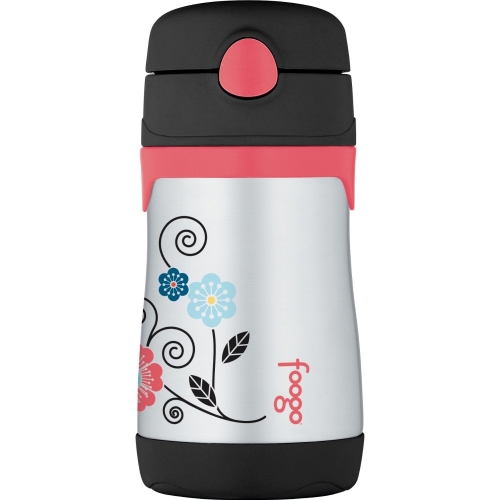
Thermos Foogo is the only stainless steel option in this group and the clear choice for temperature-sensitive use: cold water stays cold for 8+ hours, which makes it the right cup for daycare bags, park outings, and travel. The push-button straw mechanism is both leak-proof and easy for children 12 months and up to operate independently. The stainless steel interior doesn't retain flavors or odors. At $15 it's the highest price here, but for parents who need a cup to last all day outside the house, the temperature retention is genuinely useful.
Pros
- ✓Stainless steel keeps cold 8+ hours
- ✓Truly leak-proof push-button mechanism
- ✓No flavor or odor retention
Cons
- ✗Heaviest option
- ✗Highest price
- ✗Straw mechanism can be tricky to clean thoroughly
| Capacity | 10oz |
| Age | 12+ months |
| Material | Stainless steel |
| Price | $15 |
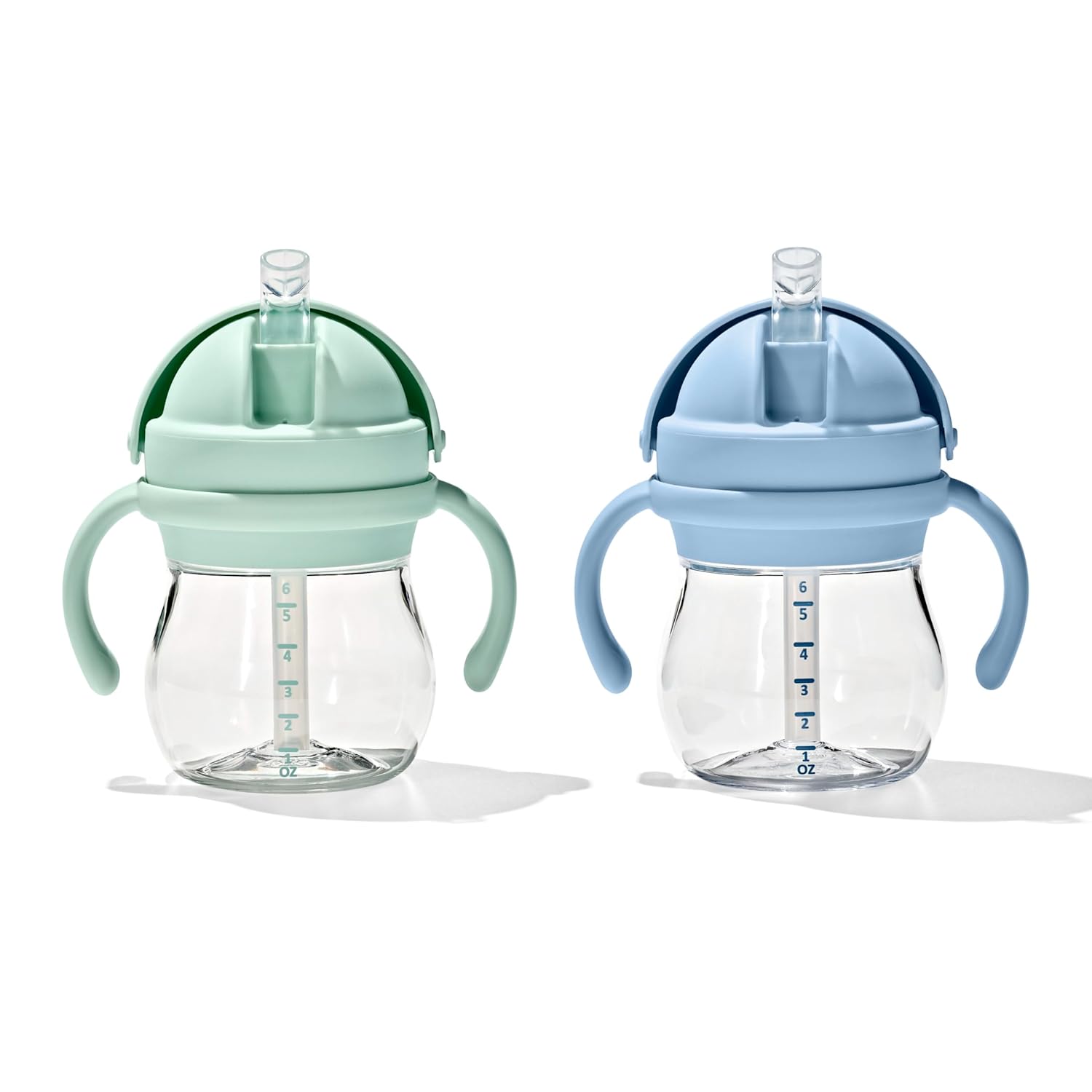
OXO Tot Transitions Cup is designed to convert between a soft spout, straw, and open-cup configuration as the child develops — three lids in one set covers the entire transition period without buying multiple cups. The OXO build quality is the best in this group: the valve disassembles fully, the handles are the most comfortable adult grip for filling and handing, and the silicone grip ring prevents dropping. At $12 it's the best value among the premium options when accounting for the three lids.
Pros
- ✓Three-lid system covers all transition stages
- ✓Best build quality in this group
- ✓Valve fully disassembles for cleaning
Cons
- ✗Higher price than basic cups
- ✗More parts to keep track of
| Capacity | 8oz |
| Age | 12+ months |
| Includes | 3 lid types |
| Price | $12 |
How to Choose a Sippy Cup: Spill-Proofing, Cleaning, and Developmental Stage
The cheapest way to choose a sippy cup is to buy one, watch it fail, and buy a better one. Here's how to skip that step.
Bottom line
Munchkin Miracle 360 is the best overall choice for the 6-18 month transition period — dentist-approved design, genuinely spill-proof, and only $8. Nuby No-Spill is the best budget backup for a household that needs multiple cups. NUK Learner Cup is the best traditional spout design for parents whose children prefer that format. Thermos Foogo is the only pick worth using for all-day outdoor or travel use. OXO Tot Transitions Cup is the best premium option for a cup that converts between stages and cleans easily.
Frequently asked questions
When should I switch from bottle to sippy cup?▼
Are sippy cups bad for teeth?▼
How do I get my toddler to accept a sippy cup?▼
How do you clean sippy cup valves properly?▼
Is it OK to put milk in a sippy cup?▼
Prices change. Check the retailer for the current price.
Comments & questions
Discussion happens on nattzy, our community forum. Sign in with Google to post — it takes a second.
Related articles

Best Baby Carrier 2026: 5 carriers through 4 seasons

Best Baby Formula 2026: 5 brands compared by ingredients
Best Air Purifier 2026: 5 models compared honestly

ConoHa WING review (2026): setup, speed and pricing
Best JP rental server 2026: 5 hosts ranked
Best LED Face Masks 2026: 3 Light Therapy Devices Compared