Best Linen Sheets 2026: 5 Sets Compared on GSM & Softness
Linen sheets don't feel like cotton sheets on day one. The question isn't which linen feels best at unboxing — it's which holds up at wash 100 and whether the gsm weight, flax origin, and certification justify the price gap between a $100 set and a $300 set.
Quick answer
For most bedrooms, Quince linen sheets are the pick — the same 170 gsm OEKO-TEX certified European flax specification as Parachute for 30 to 40% less, because the direct model strips out retail markups. Parachute remains the US reference point, Brooklinen's 175 gsm Belgian flax offers 12 colorways nobody else touches, Cultiver's 185 gsm garment-washed linen is the durability pick, and Nitori's linen-cotton blend is the Japan-market entry.
We compared each set on flax origin certification, gsm weight (fabric grams per square meter), OEKO-TEX or equivalent certification, available colorways, care requirements, and long-term owner durability signals from aggregated reviews on brand direct sites and retail platforms as of May 2026.
:strip_icc()/bhg-linen-sheets-test-parachute-set-dburreson-22-2837b93d45544567b9ef071f24175aea.jpeg)
Parachute Linen Sheet Set
Best Overall: Parachute is the US market reference for linen sheets — European flax, stone-washed, OEKO-TEX certified, 170 gsm. The softness timeline follows the category norm: stiff at unboxing, comfortable around wash 20–30, continuing to soften through years of use.
Top picks ↓| Product | Price | Link |
|---|---|---|
| $149〜249Reference price | ||
| $159〜269Reference price | ||
| $185〜310Reference price | ||
| — | No partner store here — this opens an Amazon search. | |
| $100〜150Reference price |
| Product | Material | GSM | Finish | Certification | Colorways | Sizing | Availability | Price range |
|---|---|---|---|---|---|---|---|---|
| Parachute Linen Sheet Set | 100% European flax linen | 170 gsm | Stone-washed | OEKO-TEX Standard 100 | ~10 neutral tones | — | — | — |
| Brooklinen Linen Core Sheet Set | 100% Belgian flax linen | 175 gsm | Pre-washed | OEKO-TEX Standard 100 | 12 including prints | — | — | — |
| Cultiver Linen Sheet Set | 100% European flax linen | 185 gsm | Garment-washed | OEKO-TEX | 25+ | — | — | — |
| Nitori Linen Sheet Set (Japan) | 55% linen, 45% cotton | — | — | — | — | Japanese JIS standard (single, double) | 500+ Nitori stores nationwide | Entry-level |
| Quince European Linen Sheet Set | 100% European flax linen | 170 gsm | Pre-washed | OEKO-TEX | — | — | — | $100–$150 Queen |
Top picks
Related articles
:max_bytes(150000):strip_icc():focal(749x0:751x2)/brooklinen-classic-percale-hardcore-sheet-bundle-d81b98ea19794739a188a6ea55ced992.jpg)
Parachute is the US market reference for linen sheets — European flax, stone-washed, OEKO-TEX certified, 170 gsm. The softness timeline follows the category norm: stiff at unboxing, comfortable around wash 20–30, continuing to soften through years of use. Owner reviews at 3+ year ownership consistently show durability without significant thinning at 170 gsm. Parachute's 60-day return policy and US customer service infrastructure (including physical stores) are the best-supported in this comparison for US buyers. The honest question to ask before buying: is $149–$249 versus Quince's $100–$150 for the same specification justified by the longer review track record and physical retail presence? For most buyers who prioritize price efficiency, the honest answer is no.
Pros
- ✓OEKO-TEX certified European flax at established 170 gsm
- ✓60-day return policy plus physical store presence
- ✓Stone-washed softness timeline is consistent and well-documented
- ✓Longest US owner review track record in this comparison
Cons
- ✗30–40% more expensive than Quince for equivalent specification
- ✗Fewer colorways than Brooklinen or Cultiver
Score breakdown
| Material | 100% European flax linen |
| GSM | 170 gsm |
| Finish | Stone-washed |
| Certification | OEKO-TEX Standard 100 |
| Colorways | ~10 neutral tones |

Brooklinen at 175 gsm Belgian flax is the widest-colorway option — 12 colorways including bold prints (rust, sage, navy stripes) that the neutral-focused competition doesn't touch. The 5 gsm advantage over Parachute is real but not dramatic in daily use. Pre-washed rather than stone-washed, which means the initial softness arrives slightly faster at the cost of a slightly less distinctive initial texture. OEKO-TEX Standard 100 certified. At $159–$269, it's priced comparably to Parachute. The honest case for Brooklinen over Parachute: you want a specific color or print that Parachute's neutral-focused lineup doesn't carry. The honest case against: if you want a neutral tone, you're paying for colorway breadth you don't use.
Pros
- ✓12 colorways including bold prints — widest selection in comparison
- ✓175 gsm slightly heavier than Parachute
- ✓OEKO-TEX certified 100% Belgian flax
- ✓Pre-washed for faster initial softening
Cons
- ✗Comparable price to Parachute without significant performance advantage
- ✗Bold prints may not age as well as neutral tones aesthetically
Score breakdown
| Material | 100% Belgian flax linen |
| GSM | 175 gsm |
| Finish | Pre-washed |
| Certification | OEKO-TEX Standard 100 |
| Colorways | 12 including prints |
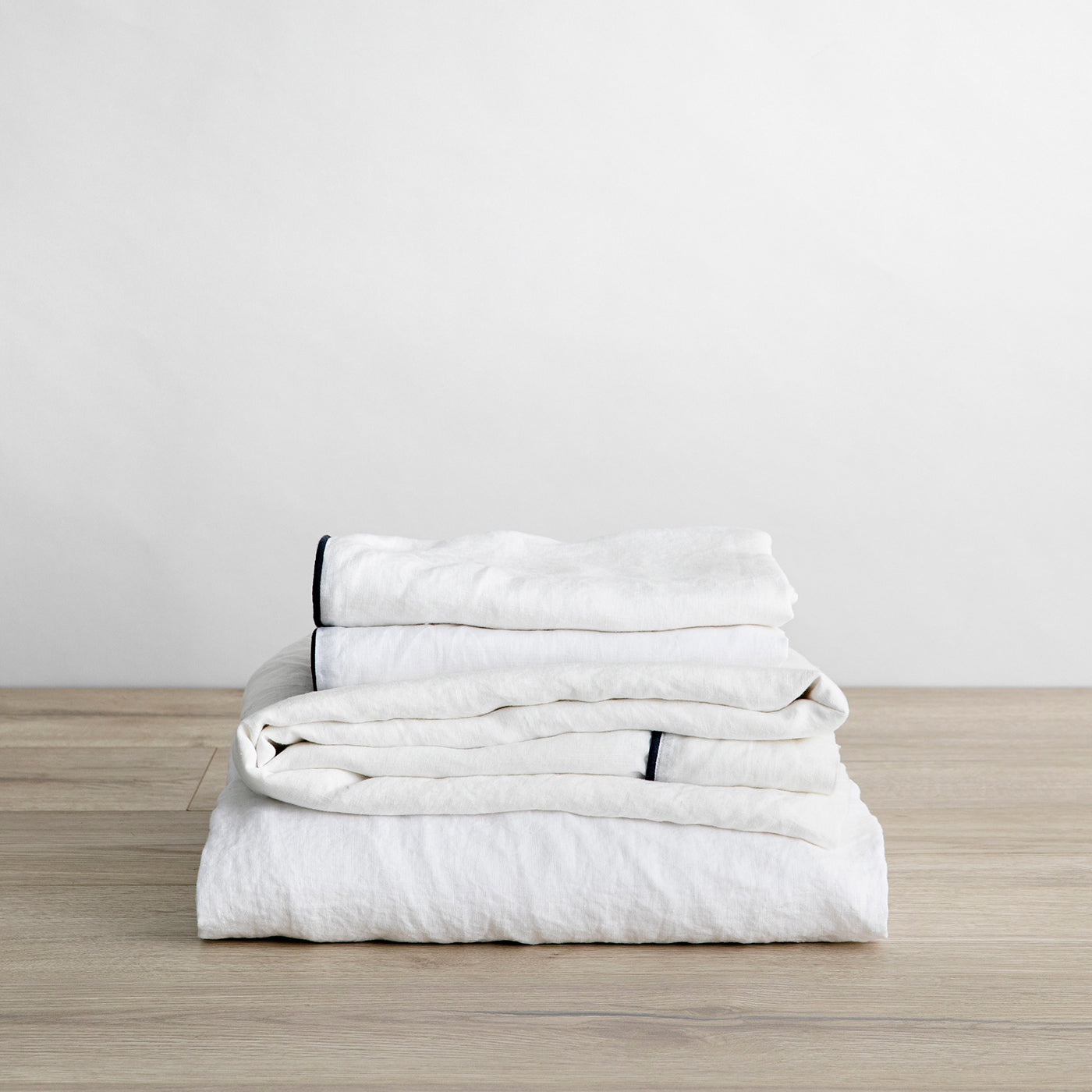
Cultiver at 185 gsm garment-washed European linen is the premium durability pick. The garment-washing process produces the softest initial feel in this comparison — the finished sewn sheet is washed and tumble-dried rather than the raw fabric, creating a more broken-in texture out of the box. At 185 gsm, owner reviews at 3+ year use consistently report continued softening rather than thinning, pilling, or color loss. The 25+ colorway selection is the broadest in this comparison. The honest trade-offs are price ($185–$310, the highest in this comparison) and shipping logistics — Cultiver ships from Australia, which means international delivery costs and longer lead times for North American buyers and meaningful customs implications for Japanese buyers.
Pros
- ✓185 gsm — heaviest linen in this comparison
- ✓Garment-washed: softest out-of-box feel
- ✓3+ year owner reviews show durability without thinning
- ✓25+ colorways — broadest design range
Cons
- ✗Highest price in this comparison ($185–$310)
- ✗Ships from Australia — import costs for non-AU buyers
Score breakdown
| Material | 100% European flax linen |
| GSM | 185 gsm |
| Finish | Garment-washed |
| Certification | OEKO-TEX |
| Colorways | 25+ |
Subscribe to our newsletter
Occasional updates and new releases — no spam.
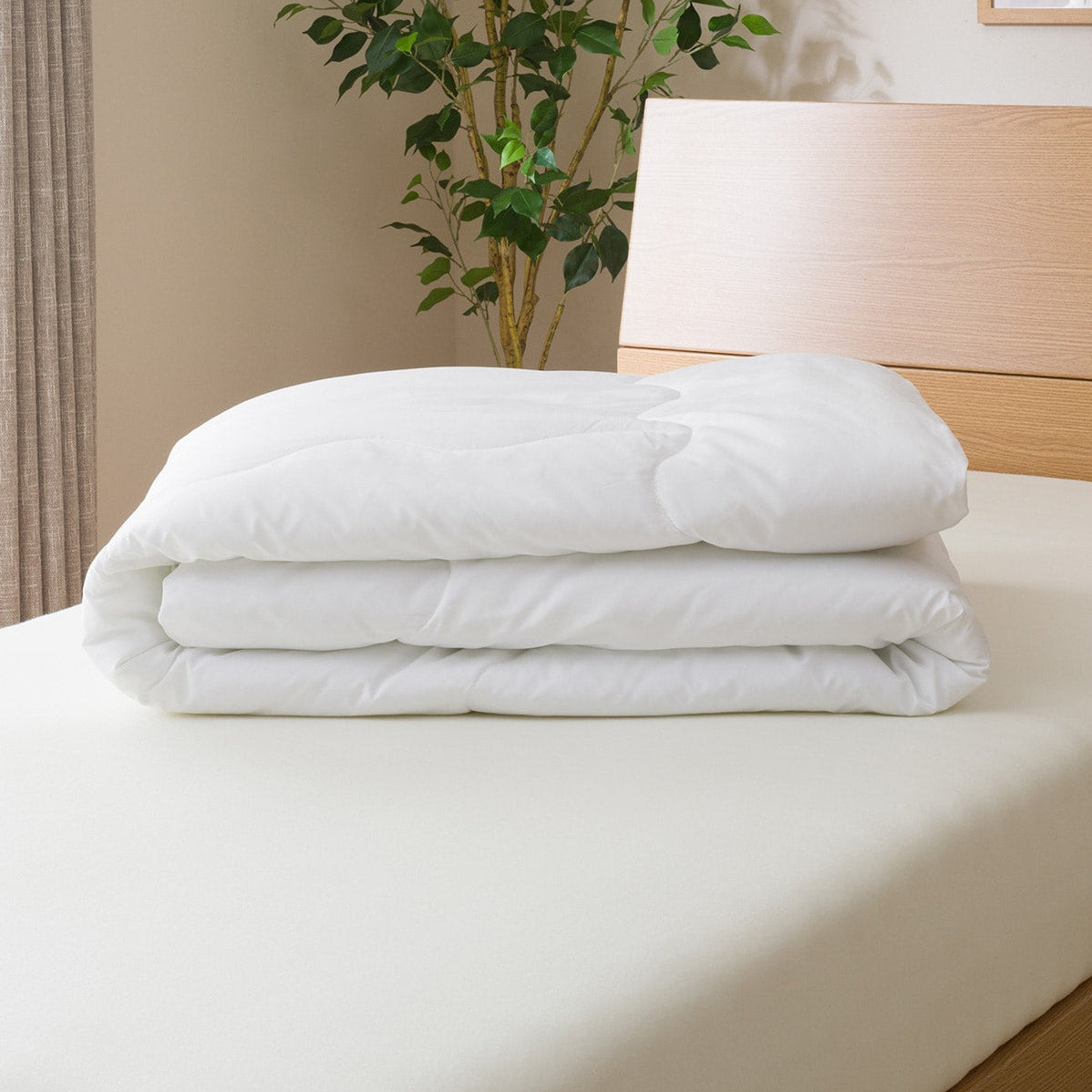
Nitori Linen Sheet Set (Japan)
Nitori's linen-cotton blend (55% linen, 45% cotton) is the Japan-market entry point — available at 500+ Nitori stores without import friction, standard Japanese JIS sizing, budget pricing for a single flat sheet. The blend starts softer than pure linen and doesn't develop the same texture over time — appropriate as an introduction to linen-feel sheets for buyers who've only used cotton, but a different product from 100% European linen at 170+ gsm. The colorway selection follows Nitori's standard bedding palette. For buyers who want the characteristic breathability and durability of full European linen: this is a starting point rather than a destination, and the path from Nitori to Parachute or Quince is straightforward once you decide linen sheets are worth the investment.
Pros
- ✓Available at 500+ Nitori stores — no import
- ✓Standard Japanese JIS sizing (single and double)
- ✓Entry-level pricing
- ✓Softer initial feel than pure linen due to cotton blend
Cons
- ✗55% linen / 45% cotton — not pure linen breathability or texture
- ✗Doesn't develop the characteristic linen hand feel over time
- ✗Limited colorways compared to international brands
Score breakdown
| Material | 55% linen, 45% cotton |
| Sizing | Japanese JIS standard (single, double) |
| Availability | 500+ Nitori stores nationwide |
| Price range | Entry-level |
No partner store here — this opens an Amazon search.

Quince European Linen Sheet Set
Quince delivers the same specification as Parachute — 170 gsm, OEKO-TEX certified, 100% European flax, pre-washed — for 30–40% less. The DTC model removes loyalty program costs, retail partner markups, and marketing overhead that brands like Parachute and Brooklinen carry. The softness timeline and certified-flax breathability are equivalent at the specification level. The honest gaps: Quince's owner review track record is shorter than Parachute's, so high-wash-count durability confidence (wash 100+) is based on a smaller sample. Quince is online-only — no physical stores for in-person evaluation. For buyers who are comfortable buying linen sheets online and prioritize price efficiency over brand recognition: Quince is the logical first choice.
Pros
- ✓OEKO-TEX certified 170 gsm European flax at 30–40% below Parachute
- ✓Pre-washed — faster initial softening
- ✓Same certification and gsm specification as more expensive competitors
- ✓No loyalty program surcharges or retail markup
Cons
- ✗Shorter owner review history than Parachute
- ✗Online-only — no in-person evaluation available
Score breakdown
| Material | 100% European flax linen |
| GSM | 170 gsm |
| Finish | Pre-washed |
| Certification | OEKO-TEX |
| Price range | $100–$150 Queen |
Which one is right for you?
For hot sleepers who want maximum breathability
Parachute Linen Sheet Set
Stone-washed European flax at 170 gsm — lighter enough to allow airflow while heavy enough to avoid the sheer-fabric feel. OEKO-TEX certified, consistently recommended by hot sleepers in owner reviews.
For buyers who want the widest color selection
Brooklinen Linen Core Sheet Set
12 colorways including bold prints alongside neutrals — the widest palette in this comparison. OEKO-TEX certified 100% Belgian flax at 175 gsm.
For buyers who want the heaviest, most durable linen
Cultiver Linen Sheet Set
185 gsm garment-washed — heaviest gsm in this comparison, associated with longer fiber life and slower thinning under regular washing. 25+ colorways.
For Japanese market buyers seeking domestic linen availability
Nitori Linen Sheet Set (Japan)
Available at Nitori stores nationwide, linen-cotton blend at accessible entry-level pricing, standard Japanese sizing (single and double per JIS), no import friction.
For buyers who want OEKO-TEX certified European linen at minimum price
Quince European Linen Sheet Set
170 gsm European flax, OEKO-TEX certified, pre-washed — equivalent certification and gsm to Parachute at roughly 30–40% lower price. No loyalty program surcharges.
How we compared
Linen sheet quality is measured on three axes that matter: gsm (grams per square meter of fabric — heavier gsm means more flax fiber per unit area, associated with longer fiber life and slower thinning under washing), flax origin and certification (European flax — primarily Belgian, French, or Dutch — has stricter water use and chemical controls than non-certified sources, and OEKO-TEX certification verifies harmful substance limits), and softness timeline (all linen starts stiffer than cotton and softens significantly over 20–30 washes — the relevant comparison is how it feels at wash 50, not at unboxing).
We did not purchase and wash test all five sets through 100 wash cycles. What we did: verify gsm, flax origin, and certification claims against manufacturer product pages and OEKO-TEX database registrations, cross-reference long-term owner reviews on brand direct sites, Nordstrom, and Amazon where available, and compare current pricing across US and Japan market listings as of May 2026.
One comparison limitation: linen-cotton blends (Nitori's 55% linen / 45% cotton) behave differently from 100% linen at every point in the softness timeline. Blends start softer than pure linen and don't reach pure linen's characteristic texture — they plateau at a softer, less distinctive feel. Buyers who want the characteristic linen hand feel (that specific dry, textured, natural drape) need 100% linen; buyers who want softer-from-day-one with some linen breathability are better served by blends.
What changed in 2026
Linen sheets crossed from specialty bedding into mainstream home goods. Five years ago, the category was dominated by Australian-origin DTC brands (Cultiver, Sheet Society) and a handful of US brands (Parachute, Brooklinen). By 2026, mass-market retailers including Quince and Target's premium tier entered with OEKO-TEX certified European linen at significantly lower prices — Quince's European linen set at $100–$150 for a Queen set carries equivalent certification to Parachute's $149–$249 set. The price compression pushed buyers to ask what exactly justifies the premium, and the honest answer is: gsm weight, garment washing process, and colorway breadth.
The garment-washing distinction became a real differentiator. Standard stone-washing (Parachute, Brooklinen) tumble-washes fabric with pumice stones or similar abrasives to break fiber stiffness — effective and consistent. Garment-washing (Cultiver) washes and tumble-dries the finished sewn garment rather than the raw fabric, which results in a softer initial feel but requires more quality control to prevent uneven shrinkage. Cultiver's 185 gsm + garment-wash combination is the reference for 'most broken-in out of the box' linen in this comparison.
In Japan, linen sheets remained a specialist product. Nitori's entry-level linen-cotton blend brought the category into accessible domestic availability, but pure linen at 170+ gsm is still primarily an import item in Japan — available through US and Australian brand websites with customs and delivery costs, or through Japanese premium bedding retailers (Nishikawa, Moda Cruzeiro) at significantly higher prices than US equivalents.
Where each fits
Parachute Linen Sheet Set at $149–$249 is the category standard-bearer in the US market. European flax, stone-washed, OEKO-TEX certified, 170 gsm — this is the specification that the majority of US linen-sheet buyers use as the reference point. The softness timeline is typical: stiff at unboxing, noticeably softer after 5–10 washes, reaching comfortable softness around wash 20–30, and continuing to soften gradually for years. Parachute's return policy (up to 60 days) and US customer service are consistently rated well. The honest weakness: at $149–$249, the price delta versus Quince's $100–$150 for equivalent gsm and certification requires justification — the main arguments for Parachute over Quince are brand recognition, broader US retail presence (physical stores in major cities), and a longer owner review record proving durability through high wash counts.
Brooklinen Linen Core Sheet Set at $159–$269 is the widest-colorway option. Belgian flax, pre-washed, OEKO-TEX Standard 100 certified, 175 gsm — slightly heavier than Parachute, with 12 colorways including bold prints (rust, sage, navy stripes) that the more neutral-focused competitors don't offer. The 5 gsm difference between Brooklinen (175 gsm) and Parachute (170 gsm) is detectable but not dramatic in daily use. Brooklinen's strength is selection breadth for buyers who want specific colors or prints as part of a deliberate bedroom design scheme.
Cultiver Linen Sheet Set at $185–$310 is the heaviest and most broken-in option. Australian-brand European linen, garment-washed, OEKO-TEX certified, 185 gsm — the highest gsm in this comparison, associated with the longest durability timeline and the softest initial feel from the garment-washing process. Owner reviews at 3+ year ownership consistently report minimal pilling and continued softening rather than thinning — the durability signal for 185 gsm garment-washed linen is the strongest in this comparison. At $185–$310, it's the highest price; the 25+ colorway selection is the broadest. The honest weaknesses are price and availability — Cultiver ships from Australia with international delivery costs and longer lead times for non-US buyers.
The Nitori Linen Sheet Set is the Japan-market entry point. Linen-cotton blend (55% linen, 45% cotton), standard Japanese JIS sizing (single and double), available at Nitori stores nationwide without import friction. The blend construction starts softer than pure linen and doesn't develop the same characteristic texture over time. Its single-size flat sheet is the lowest entry point in this comparison by a significant margin. The honest weakness: Nitori's linen-cotton blend does not replicate the breathability or texture of 100% European linen at 170+ gsm, and the colorway selection is limited to Nitori's standard palette. For buyers who want the linen feel and durability record of 100% European flax, Nitori is a category introduction rather than a destination purchase.
Quince European Linen Sheet Set at $100–$150 is the price-disruption option. 100% European flax, OEKO-TEX certified, pre-washed, 170 gsm — this is the same specification category as Parachute (170 gsm, OEKO-TEX, European flax) at 30–40% lower price. Quince operates a direct-to-consumer model with no loyalty surcharges, no retail partner markups, and minimal marketing spend, which is where the price difference comes from. The honest gaps versus Parachute: Quince has a shorter owner review history (fewer years of high-wash-count durability reports) and no physical retail presence for in-person evaluation. For buyers comfortable with online-only purchasing and willing to accept a slightly shorter durability track record in exchange for 30–40% price savings: Quince is the logical choice.
Verdict
For buyers who want certified European linen at the lowest justifiable price: Quince at $100–$150 delivers OEKO-TEX certified 170 gsm European flax for 30–40% less than Parachute and Brooklinen for equivalent specification. Accept the shorter review track record and online-only purchasing as the trade-off.
For buyers who want the softest out-of-box experience and best long-term durability signal: Cultiver at $185–$310 with 185 gsm garment-washed European linen. The highest gsm in this comparison, 3+ year owner reviews show continued softening rather than thinning, and 25+ colorways cover the broadest design range. Pay more; get more. For Japan-market buyers: Nitori's budget linen-cotton blend is the accessible starting point for testing linen sheets without import costs — understanding that 100% pure linen at 170+ gsm is a different product that requires importing or visiting a premium Japanese bedding retailer.
Frequently asked questions
Why do linen sheets feel scratchy at first, and when do they get soft?▼
Is European flax actually better, and does it matter which country?▼
How do I wash linen sheets without damaging them?▼
Prices change. Check the retailer for the current price.
Comments & questions
Discussion happens on nattzy, our community forum. Sign in with Google to post — it takes a second.