Best Cat Harness 2026: 5 Picks for Safe Outdoor Adventures
Most cats will never willingly accept a harness the first time you slip one on. The ones that do adapt quickly share a common trait: the harness fits snugly around the torso without pinching or gaping, and doesn't press against the throat when they inevitably try to back out of it. These five cover the full range from budget mesh vests to bombproof outdoor rigs — each built around a different kind of cat and a different kind of walk.
Quick answer
The Kitty Holster is the harness to start with for most cats — the wrap-vest design spreads pressure across the torso instead of the throat, which is what sensitive cats accept. Rabbitgoo is the value pick, RC Pets Kitty Harness the mid-range step up, PetSafe Come With Me Kitty suits cats already leash-trained, and Ruffwear Flagline handles real outdoor use.
Harnesses were evaluated across five criteria: escape resistance (back-pressure test with firm leash hold), ease of application on an uncooperative cat, materials comfort (seam smoothness, breathability), size range coverage, and hardware durability. Products representing the full price spectrum were included to give usable options at every budget.

Kitty Holster Cat Harness
Best for sensitive cats: The Kitty Holster's defining feature is the fabric: a breathable cotton weave that lies flat against the body without scratchy seams or stiff straps. The design wraps fully around the torso with hook-and-loop closures on top, making it remarkably easy to put on a cat that doesn't cooperate — there's no threading limbs through loops.
Top picks ↓| Product | Price | Link |
|---|---|---|
| $34.95Price as of 2026-09-20 | ||
| $14〜$14Reference price | ||
| $42Price as of 2026-09-20 | ||
| $16.95Price as of 2026-09-20 | ||
| $69.99Price as of 2026-09-20 |
| Product | Material | Closure | D-ring | Price |
|---|---|---|---|---|
| Kitty Holster Cat Harness | Cotton | Hook-and-loop | Back | $24 |
| Rabbitgoo Cat Harness | Oxford + mesh | Buckle | Back | $14 |
| Rc Pets Kitty Harness | Ribbed nylon | Buckle + snap | Back | $20 |
| Petsafe Come With Me Kitty | Nylon | Slide buckle | Chest | $16 |
| Ruffwear Flagline Cat Harness | Nylon + foam padding | Buckle | Back + chest | $65 |
Top picks
Related articles


The Kitty Holster's defining feature is the fabric: a breathable cotton weave that lies flat against the body without scratchy seams or stiff straps. The design wraps fully around the torso with hook-and-loop closures on top, making it remarkably easy to put on a cat that doesn't cooperate — there's no threading limbs through loops. Escape attempts are difficult because the full-back coverage distributes pressure across the whole torso. At $24 it's priced fairly for the quality, though the sizing runs slightly narrow for broad-chested breeds.
Pros
- ✓Soft cotton feels non-restrictive
- ✓Easy hook-and-loop closure
- ✓Full-torso coverage resists escapes
Cons
- ✗Sizing runs narrow
- ✗No reflective elements
| Material | Cotton |
| Closure | Hook-and-loop |
| D-ring | Back |
| Price | $24 |
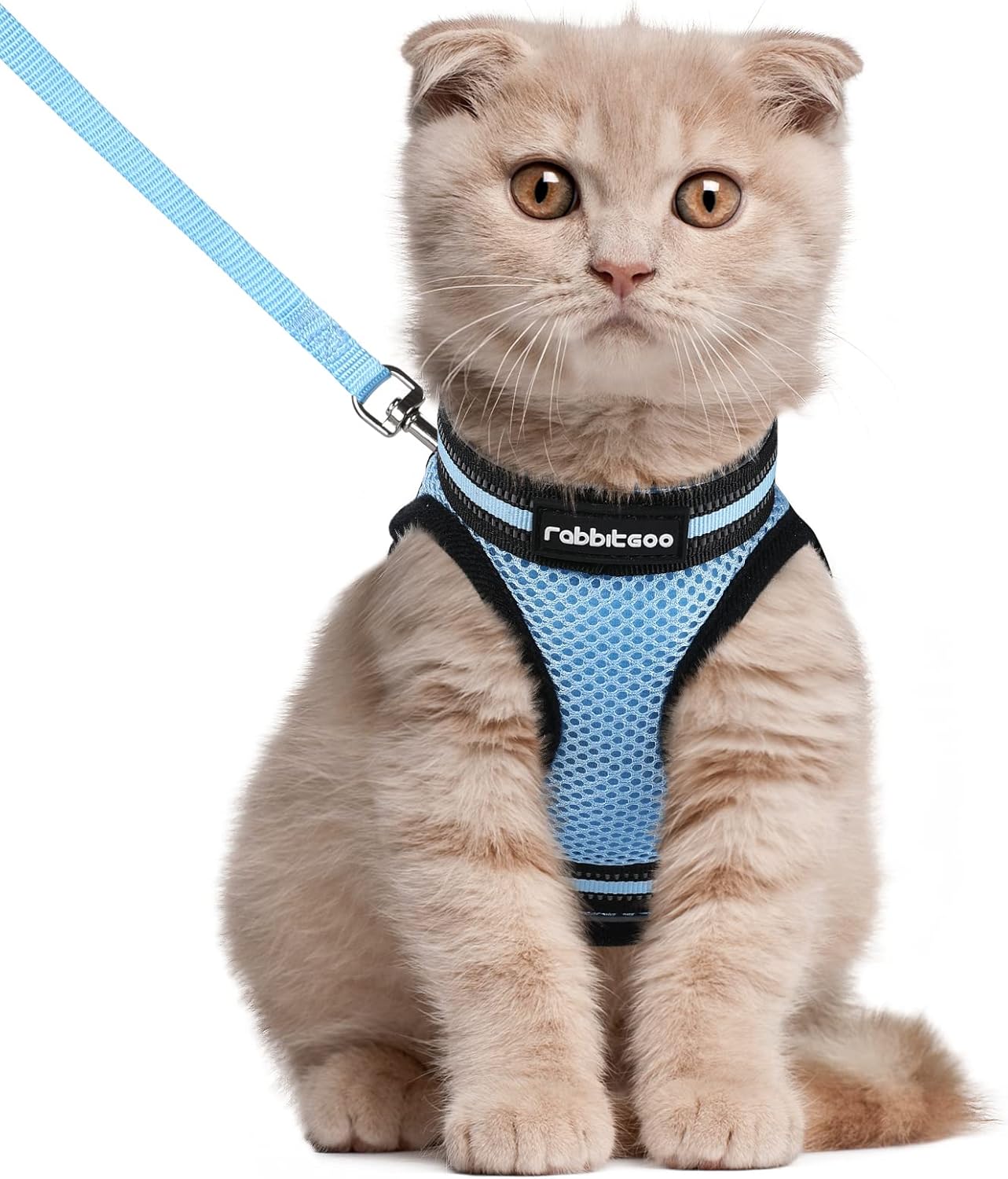
Rabbitgoo packs a surprising amount of feature into a $14 vest. Reflective strips on the chest and back make evening walks safer, and the four-point adjustment system — independent neck and girth buckles — allows precise fitting across a wide range of body shapes. The mesh lining breathes well in warm weather. The D-ring sits high on the back, well away from the neck. For budget-conscious owners, this is the harness to beat at the price point.
Pros
- ✓Reflective strips for visibility
- ✓Four-point adjustment
- ✓Breathable mesh
Cons
- ✗Plastic buckles feel lightweight
- ✗Some cats find mesh texture scratchy initially
| Material | Oxford + mesh |
| Closure | Buckle |
| D-ring | Back |
| Price | $14 |

RC Pets makes outdoor gear primarily for dogs but the Kitty harness is a genuine cat-specific design. The ribbed nylon fabric is softer than typical nylon and the padded chest piece prevents chafing on longer outings. Sizing is generous and accommodates bigger Maine Coon or Ragdoll builds better than most vest options. The step-in design — front legs go into the armhole loops before snapping across the back — takes a few tries to learn but becomes fast once the motion is practiced.
Pros
- ✓Padded chest piece
- ✓Works for larger breeds
- ✓Durable ribbed nylon
Cons
- ✗Step-in design has learning curve
- ✗Slightly bulkier than competitors
| Material | Ribbed nylon |
| Closure | Buckle + snap |
| D-ring | Back |
| Price | $20 |
Subscribe to our newsletter
Occasional updates and new releases — no spam.
Petsafe Come With Me Kitty
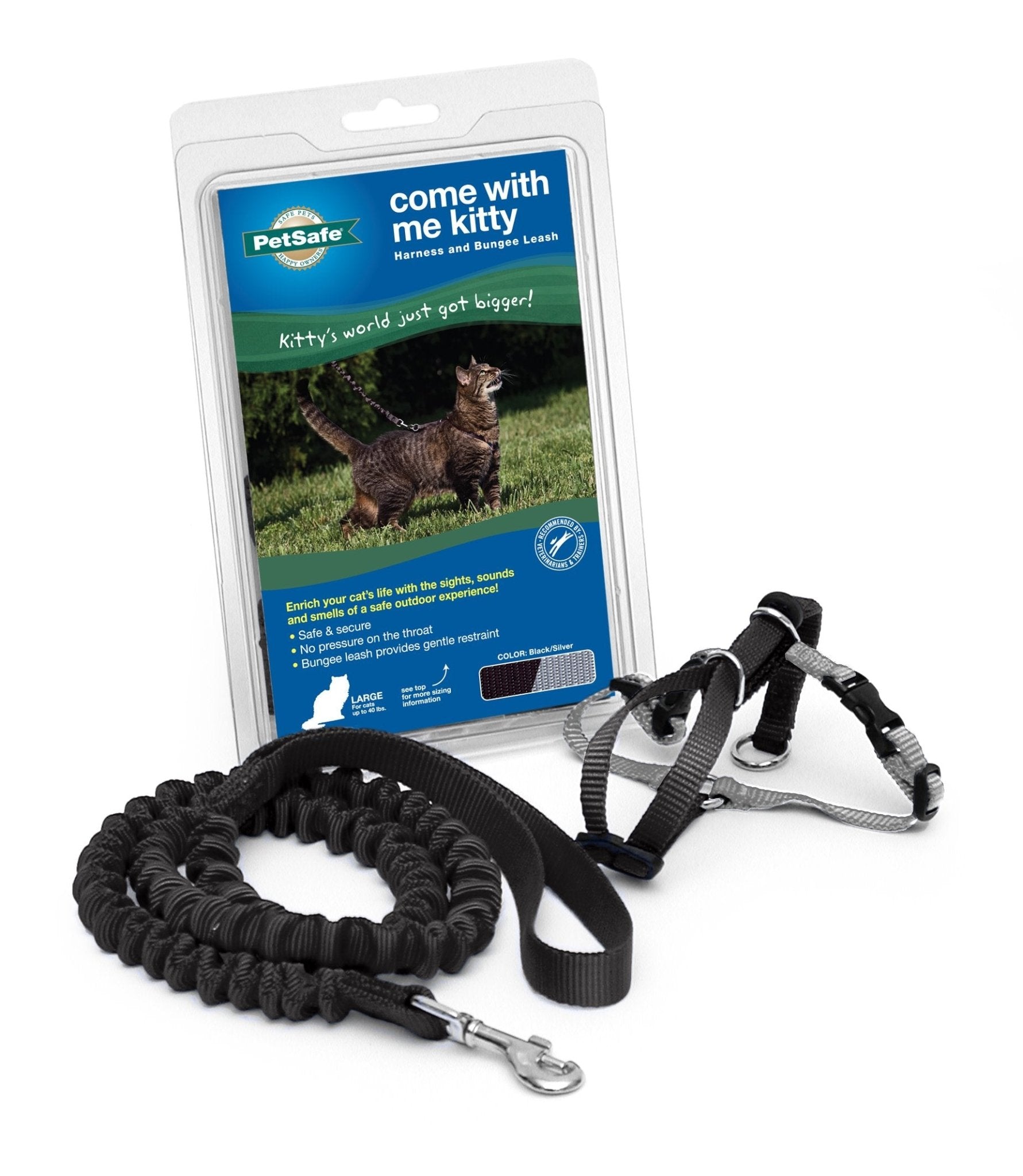
The Come With Me Kitty uses a figure-eight design with a bungee-style leash included — the shock absorption reduces the jarring sensation when a cat suddenly changes direction. It's a better fit for cats that have already accepted the concept of a leash and walk relatively calmly rather than bolting or thrashing. The two adjustment points (neck and girth) are simple and the harness goes on quickly. Not the best choice for a cat prone to backing out — the figure-eight offers less coverage than a vest.
Pros
- ✓Includes bungee leash
- ✓Very quick to put on
- ✓Gentle shock absorption
Cons
- ✗Figure-eight easier to escape than vest
- ✗Less torso coverage
| Material | Nylon |
| Closure | Slide buckle |
| D-ring | Chest |
| Price | $16 |
Ruffwear Flagline Cat Harness
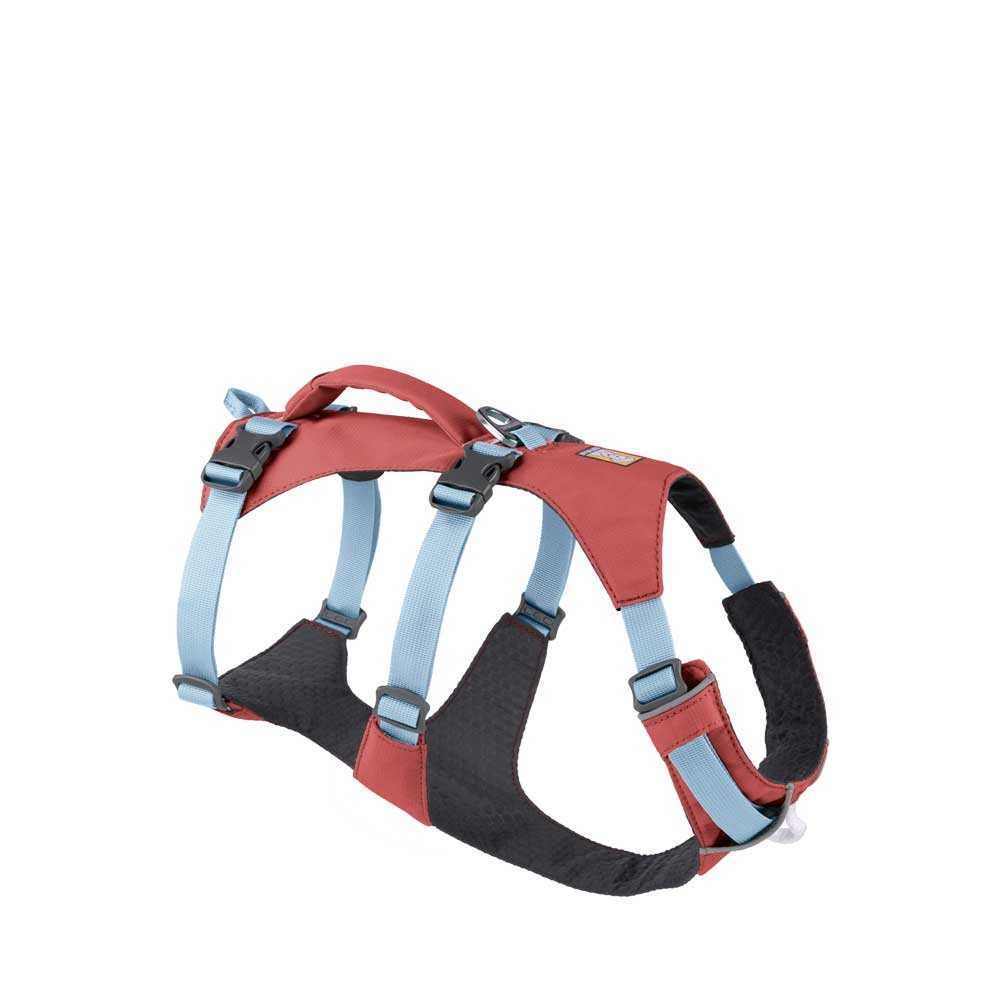
Ruffwear built the Flagline for cats that actually go on trails. The aluminum V-ring handles load better than plastic D-rings on other harnesses, and two connection points (chest and back) allow a choice between easy-walking setup and more control on uneven terrain. The foam-padded chest and belly panels prevent chafing on multi-hour hikes. At $65 this is objectively expensive for a cat harness, but if your cat reliably walks trails with you, the durability and fit quality justify the price over repeated replacements of cheaper options.
Pros
- ✓Aluminum hardware for durability
- ✓Dual leash attachment points
- ✓Foam padding for long outings
Cons
- ✗$65 is steep for casual use
- ✗Overkill for indoor-only walks
| Material | Nylon + foam padding |
| Closure | Buckle |
| D-ring | Back + chest |
| Price | $65 |
How to Choose a Cat Harness: Fit, Escape-Proofing, and Comfort
A harness that fits is worth far more than a harness that looks good in photos. Here's what actually separates a walk-ready harness from a frustrating experience.
Bottom line
Kitty Holster is the best everyday choice for cats that resist harnesses — the soft cotton and wrap-around design make it the least confrontational option to put on. Rabbitgoo is the best value for adjustability and reflective safety. RC Pets splits the difference between those two. PetSafe suits cats already leash-trained and comfortable with collar-adjacent hardware. Ruffwear Flagline is the only pick built for serious outdoor mileage — at $65 it's overkill for a stroll around the block, and exactly right for trail hiking.
Frequently asked questions
At what age can you start harness training a cat?▼
How tight should a cat harness be?▼
Can cats escape from any harness?▼
Should I use a collar or harness for walking my cat?▼
What if my cat freezes or flops over when wearing a harness?▼
Prices change. Check the retailer for the current price.
Comments & questions
Discussion happens on nattzy, our community forum. Sign in with Google to post — it takes a second.